
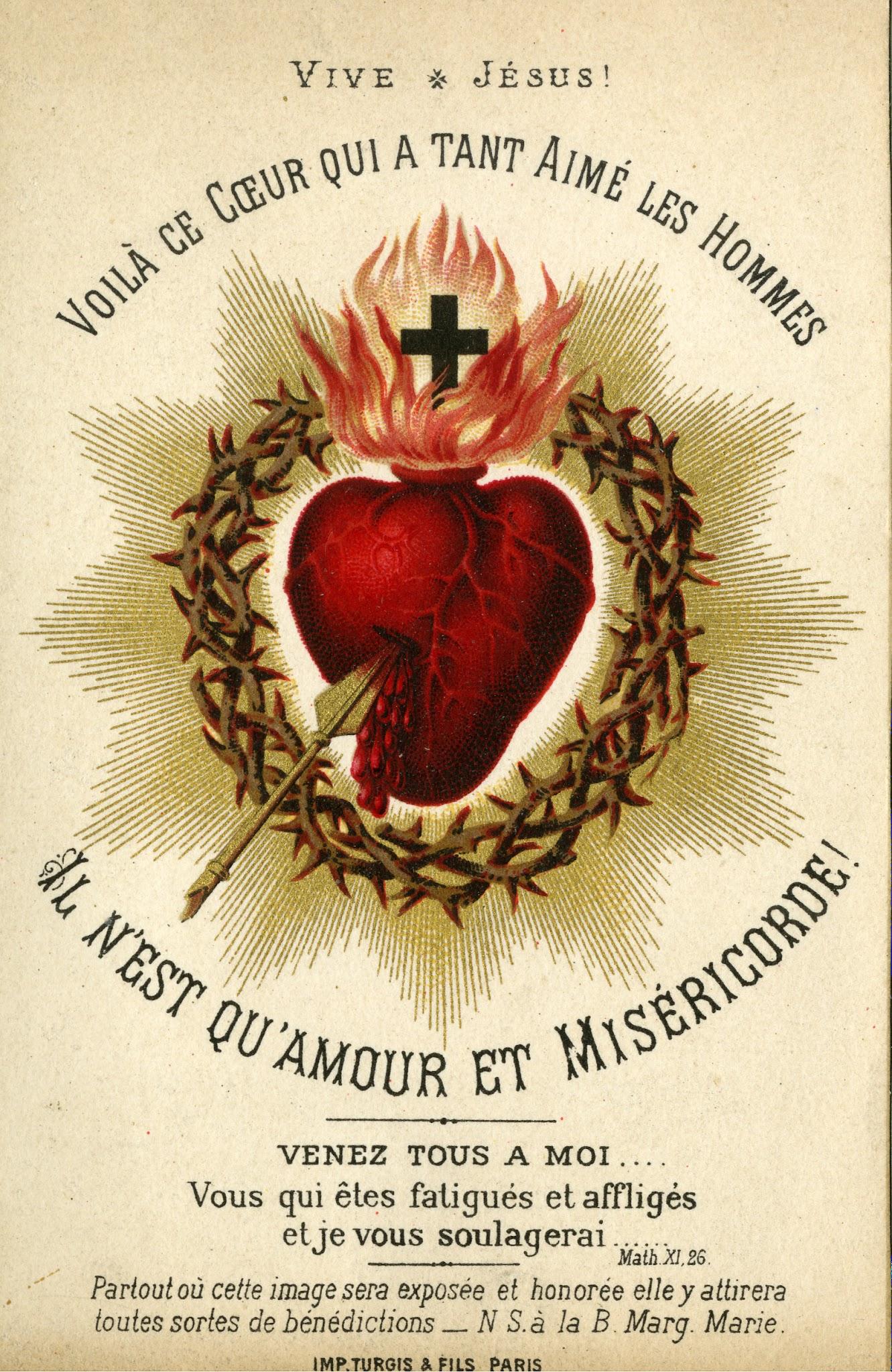
His Name Is Written on Their Foreheads
The Power of the Most Holy Name of Jesus in the Final Battle
Jesus, You source of all goodness, You hope-giving strength of every joy, You are the origin of all beauty, the heart’s deepest passion.
Jesus, in whom penitents hope; how kind You are to the one who strives, how good to all who seek You; what must it be for the one who finds?
Jesus, You true sun of life for everyone who longs for You, who seeks You even in tears and trembles for heaven’s answer.
Jesus, You our Lord and Savior, Your light gives us the new day, the world is made new, sheltered in You, the darkness yielded to the light.
Jesus, You offspring of the Virgin Mother, You fair radiance of our love, to You be thanks, to You praise and honor, one day in full in the kingdom of the blessed. Amen.
From the hymn for Lauds on the Feast of the Name of Jesus
This brochure of the Marian Movement of Priests and Laity presents the power of the Most Holy Name of Jesus: the testimonies of numerous saints, the invocation and adoration of this Name in daily life, its healing and liberating power, and its significance in the final battle that the Book of Revelation of St. John describes.
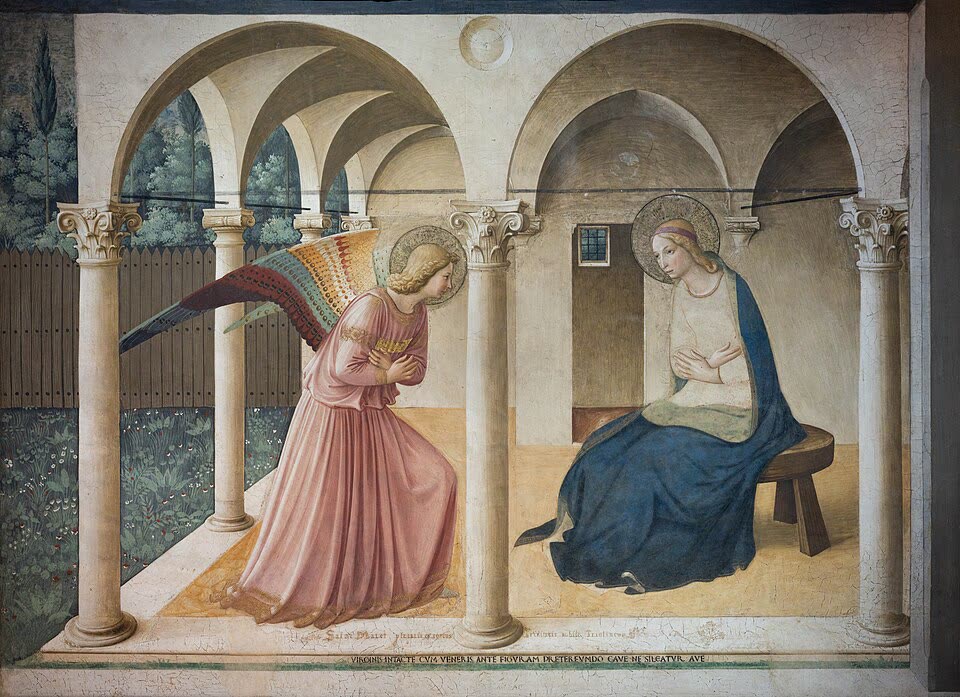
The Annunciation of the Archangel Gabriel to Mary
Foreword
You shall call His name Jesus. He will be great, and will be called the Son of the Most High. Lk 1,31-32
The name Jesus is the name by which God Himself, the second Divine Person of the Most Holy Trinity, willed to be called in His human nature. This name was brought to us from heaven, for it first rang out on earth from the mouth of the Archangel Gabriel. This name is the expression of the meaning and purpose of the Incarnation, namely redemption, for Jesus means Savior in Hebrew. This name was then also written on the wood of the Cross on Golgotha, and since then it adorns all crosses and depictions of the Cross.
He humbled Himself and became obedient unto death, even death on a cross. Therefore God has highly exalted Him and bestowed on Him the name which is above every name, that at the name of Jesus every knee should bow, in heaven and on earth and under the earth, and every tongue confess that Jesus Christ is Lord, to the glory of God the Father. Phil 2,8-11
Redemption means participation in the divine nature through the redeeming grace of Christ. It is happiness in God already here on earth in the life of grace, and one day in the blessed vision of God. In the Book of the Prophet Habakkuk this beautiful statement stands in the Latin Vulgate version: Exultabo in Deo Iesu meo, (Hab 3,18), that is, I rejoice in God, my Jesus (= Savior). Our eternal happiness will consist in rejoicing in Jesus, our God and Savior, that is, through Him in the Triune God.
We will receive a new name in heaven (cf. Rev 2,17), and on the foreheads of the saved the name of God will be written (cf. Rev 3,12), namely the name of Jesus and the name of the Father. (Cf. Rev 14,1) Already in the Old Covenant God promised us: Every one who is called by My name, whom I created for My glory, whom I formed and made. (Is 43,7) This name, in which God formed the chosen, that is, those who in the end are saved, is the name of our Redeemer. St. Paul teaches that the new man is renewed after the image of the One who created him. (Cf. Col 3,10)
The mission of the Church consists in bearing the redemption of Christ, and thus His name, to the ends of the earth, as the Lord said of the newly converted Paul: He shall carry My name before the Gentiles and kings and the children of Israel. (Acts 9,15) This is indeed the will of God, that all believe in the name of His Son. (Cf. 1 Jn 3,23) For there is no other name given to men by which they can be saved, (Acts 4,12) and whoever calls upon the name of the Lord Jesus Christ will be saved. (Cf. Acts 2,21)
The task of Christians is to glorify God in the name “Christian.” (Cf. 1 Pet 4,16) From the early days of the Church, Clement of Alexandria (early 3rd century) hands down this moving statement about the dignity of Christians:
All the faithful, then, are good and godlike, and worthy of the name by which they are encircled as with a diadem. Quis div. salv. 36,1
But the task of the Christian is also to confess the name of Jesus before men (cf. Mt 10,32) and to desire that every tongue confess that Jesus is Lord. (Phil 2,11) For the sake of this confession the Church and true Christians are hated by the world, as the Lord Himself told us: You will be hated by all for My name’s sake; but he who endures to the end will be saved. (Mk 13,13) Yet it should be a joy for a true Christian to suffer dishonor for the name of Jesus. (Acts 5,41)
Every true Christian should be guided in all that he does by this word of the Psalm: Not to us, O LORD, not to us, but to Thy name give glory. (Ps 115,1) If with the help of God we think and act in this way, God will grant us the grace that, when we leave this earthly life, we will have the unspeakable joy of pronouncing with our heart and mouth the most holy, most powerful and sweetest of all names, the name Jesus, or, with St. Philip Neri, cry out: My Jesus! Jesus, be Jesus to me!
January 25, 2021, on the feast of the Conversion of the Apostle Paul
+ Athanasius Schneider, Auxiliary Bishop of the Archdiocese of Saint Mary in Astana
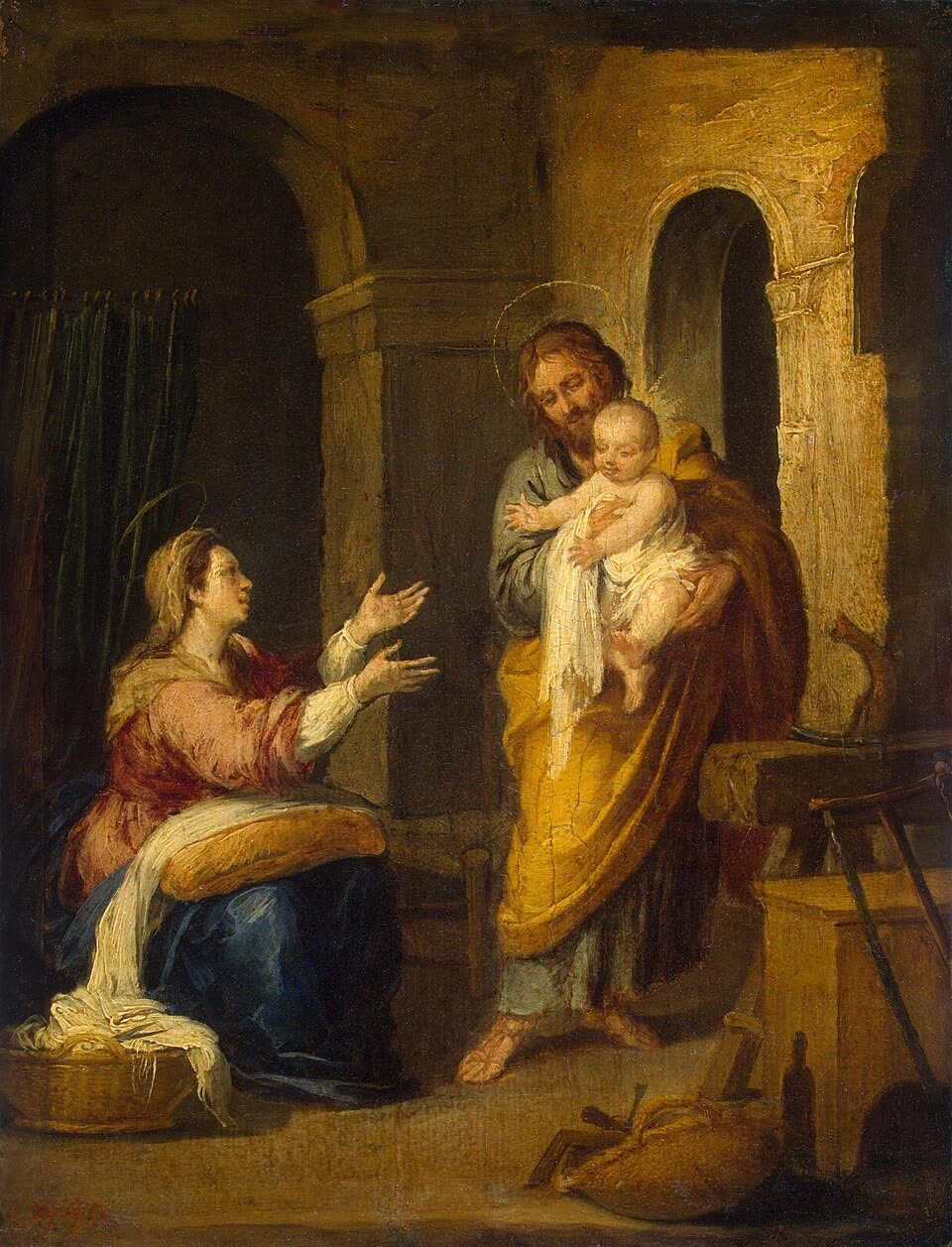
The Holy Family: Mary, Joseph and the Child Jesus
Witnesses to the Power of the Most Holy Name of Jesus
Since the beginnings of the Church, the unfathomable power and wisdom hidden in the Most Holy Name of Jesus have been recognized as wonderful and unique. Into this mystery of the Divine Name the Mother of God, Mary, and St. Joseph have certainly penetrated most deeply. For God entrusted to them His only-begotten Son, in order to convey to all mankind streams of graces from the heart of the Redeemer. Therefore we may with childlike trust ask for the gift of love for the Most Holy Name of Jesus from their hands. For Mary and Joseph are our surest guides on the way to the unceasing prayer of the heart.
St. Ignatius liked very much to pronounce the name Jesus. Of him the following is told: When the Apostles were quarreling among themselves about who among them would be the greatest in the kingdom of heaven, Jesus came with them to Capernaum, called there a four-year-old boy who was standing with his mother in the doorway of the house, took him by the hand and said to the Apostles: Unless you turn and become like children, you will never enter the kingdom of heaven. Whoever humbles himself like this child, he is the greatest in the kingdom of heaven. (Mt 18,3ff)
In later years this boy Ignatius very often went to the place where the Savior had called him, kissed the ground there and said to his companions: Behold, here in this place Jesus took me into His arms.
Ignatius grew up, later became a priest and then bishop in the great city of Antioch, where St. Peter had worked for seven years before. Antioch soon became Christian. When the Roman Emperor Trajan came to Antioch on his military campaign and found the pagan temples empty, he asked the governor who was to blame for the temples standing empty. The governor said: The bishop of the Christians, Ignatius, is to blame. Then the emperor had the aged bishop brought before him and asked him: Are you the evil spirit who stirs up such great unrest in this city? Ignatius answered: He is no evil spirit who carries God in his heart! The emperor said: Do you mean perhaps Jesus of Nazareth? The bishop affirmed this and instructed the emperor about the folly of pagan idolatry. This made the emperor furious, and he said to the soldiers: Ad leonem, that is, to the lions. The Christians in Rome wanted to free him and prevent his death. But Ignatius wrote them a letter and asked them not to snatch the martyr’s crown from him. Arriving in Rome, he was delivered in the amphitheater, before an enormous crowd, to two hungry lions.
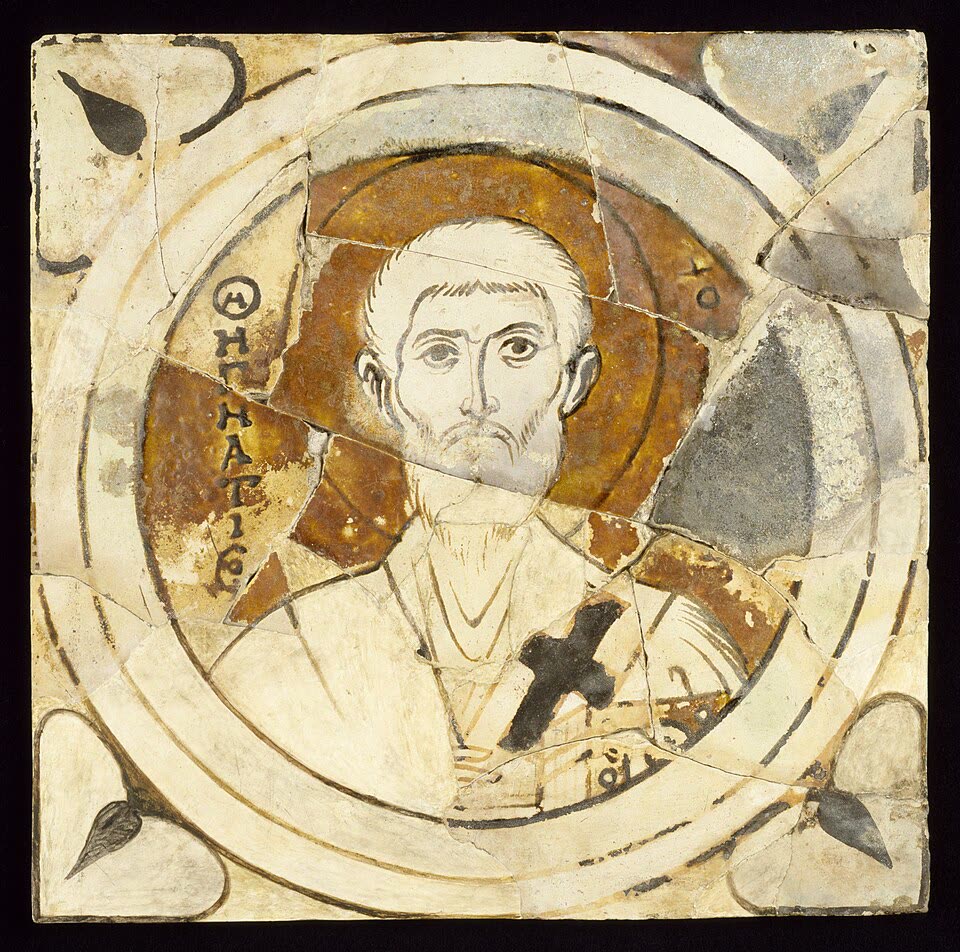
St. Ignatius of Antioch
Beforehand St. Ignatius offered a loud prayer and said: The name of Jesus cannot depart from my mouth; and even if it did, it cannot be blotted out of my heart. All the pagan spectators marveled at the steadfastness and the joyful death of this old man. The lions tore him apart and left only a few bones and the heart. In the heart the name of Jesus could be read, formed by blue veins. The companions of St. Ignatius took his relics from the amphitheater at night and carried them to Antioch, where they were kept on the altar and held in high honor. This happened in the year 107. God thus honored this saint, because he had held the name of Jesus in high honor.1
St. Gregory of Tours (538–594) was advised by his guardian angel to write the name of Jesus on a small card and place it under the pillow of his sick father, whereupon the latter quickly recovered.
St. Leonard of Port Maurice (1676–1751) recommended placing a card with the name of Jesus on doors, whereby many were preserved from illness and misfortune of every kind.
1 Source: Spirago 796, op. cit.
To St. Edmund, King of England (840–870), later Archbishop of Canterbury, Jesus Himself taught the power of His Most Holy Name. When Edmund was once traveling alone, a wonderfully beautiful boy appeared to him and asked him: Edmund, do you not know Me? Edmund said no. The boy then said to him: Look at Me and you will recognize who I am. Edmund looked closely at the child and then saw on the forehead the shining letters INRI Iesus Nazarenus Rex Iudaeorum (Jesus of Nazareth, King of the Jews). Then the child said: Now you know who I am. You see My name. Impress it on your heart. Write Him on your forehead every evening by making the sign of the cross and saying the words: Jesus of Nazareth, King of the Jews. This will preserve you from a sudden death.
I will extol Thee, my God and King, and bless Thy name for ever and ever. Ps 145,1
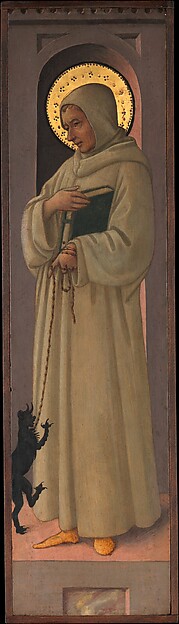
St. Bernard of Clairvaux at prayer
St. Bernard of Clairvaux (1090–1153) writes to his monks: Whatever I always have on my lips, whatever I always have in my heart, whatever I write without ceasing, what constitutes my philosophy in its innermost core, is Jesus, and indeed Jesus as the Crucified.
In his commentary on the Song of Songs he describes the similarity of oil with the name of Jesus, which rests equally on three properties: Oil keeps the fire burning, nourishes the body and soothes pain. It is thus light, food and medicine. Now follow the same effects in the name of the Bridegroom: When He is preached, He shines; when He is contemplated, He nourishes; when He is invoked, He anoints and soothes. The Lord says: Call upon Me in the day of trouble, and I will deliver you. (Ps 49,15) […] Here, my soul, you have kept in the name of Jesus, as in a little flask, your elixir. It is absolutely healing and will never fail to take effect in all your illnesses. O carry this medicine always on your breast, keep it always at hand, so that all your thinking and acting may aim at Jesus.
Your name is oil poured out. Song 1,2
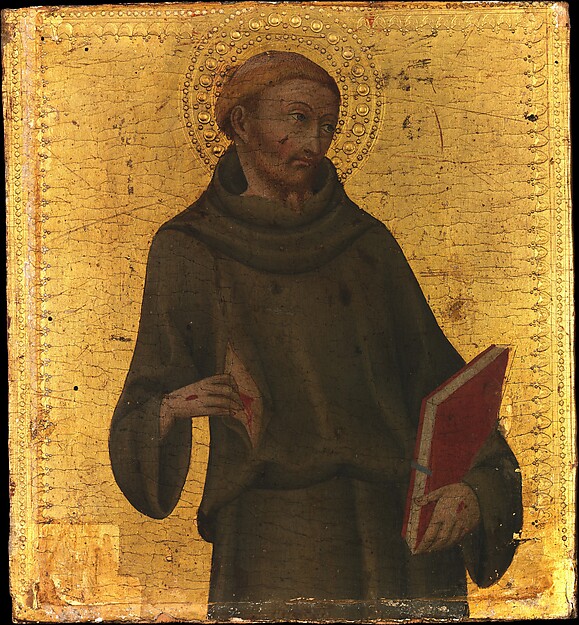
St. Francis
Of the great love of St. Francis (1181–1226) for the Most Holy Name of Jesus, Thomas of Celano writes as if absorbed in prayer: More than can be humanly understood, he was inwardly moved whenever he spoke Your name, O holy Lord. Then he was full of rejoicing and of the most chaste joy, and he appeared truly as a new man and from another world. […]
Celano also describes how St. Francis continually contemplated the Incarnation and the suffering of Jesus: Above all it was the humility of the Incarnation of Jesus and the love shown in His Passion that so occupied his thoughts that he scarcely wished to think of anything else. […] When he spoke the name Child of Bethlehem or Jesus, he licked his lips with his tongue, as it were, relishing and savoring with his blessed palate the sweetness of this name.
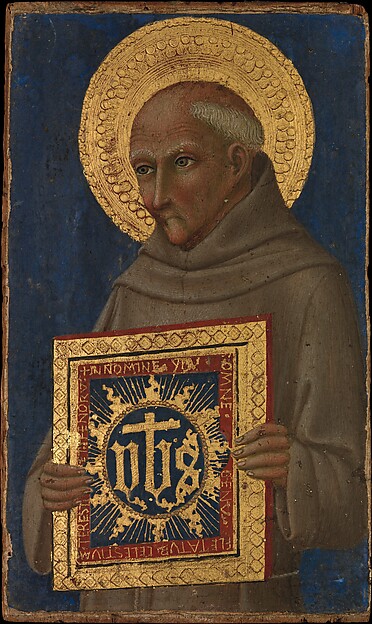
St. Bernardine of Siena
Two hundred years later a spiritual son of St. Francis, St. Bernardine of Siena (1380–1440), became the standard-bearer of the name of Jesus. He never held a parish mission without a fervent sermon on the name of Jesus, whose veneration he recognized as the great remedy against the falling away from the faith. In his biography it says: When he finally saw that the glorious name, which is above every name, (Phil 2,9) had almost fallen into oblivion in the hearts of men, he was seized with the desire, as a true imitator of the Apostle, to bear this name before all kings and tribes and peoples. (Cf. Acts 9,15)
He sought to obtain a small wooden board on which this name was painted or drawn in golden letters. This board he held up before the crowds of people who gathered daily for his sermon. With a raised voice he proclaimed to them: This is your badge, this is the weapon of the People of God! This is the name, dearly beloved faithful, and there is no other in which you can be saved. (Cf. Acts 4,12) This is further the healing and loving name, whose image you should wear indelibly on your breast and look at there daily, and display in the public squares, and which each of you should paint visibly and in dignified beauty over the lintel of his house.
This is the name which, according to the teaching of the Apostle, you must keep before your eyes in all days of happiness and call upon in the days of misfortune. For this holy name is written, first, in the Book of Life, as the Prophet attests; then, on the inscription of the Cross of our Redemption, as we see from the Gospel, (cf. Jn 19,19) and further, it is written on the forehead of every saint in the eternal homeland.2 (Cf. Rev 22,4)
For the triumph and glorification of the victorious name of Jesus, for the salvation of souls and in reparation for the offenses against the Most Holy Name of Jesus, St. Bernardine earnestly recommended three very concrete forms of veneration to the people:
- The unceasing prayer of the heart through the invocation of the Most Holy Name of Jesus
- The monogram of the Name of Jesus as an outwardly visible sign
- The zealous spreading of devotion to the Most Holy Name of Jesus
Sing to the LORD, bless His name; tell of His salvation from day to day. Ps 96,2
2 Das Leben des heiligen Bernardin von Siena, translated by Lothar Schläpfer OFMCap, ed. W. Nigg and W. Schamoni, Düsseldorf 1967.
Living in the Sun of the Most Holy Name of Jesus
The key to the spiritual life is the Jesus Prayer. St. Elder Porphyrios
Let us consider our soul as a castle made entirely of diamond or of very clear crystal. There are many rooms in it, just as in heaven there are many dwelling places. (Cf. Jn 14,2) I can find nothing with which to compare the lofty beauty and capacity of a soul. In my experience, prayer and meditation are the gate through which one can enter this castle. St. Teresa of Avila
The Key of the Son of David
The name Jesus is the shortest prayer of the heart and the key to enter the mysterious castle of our soul, which is created through and toward Jesus. (Cf. Col 1,12)
The words of the Holy One, the True One, who has the key of David, who opens and no one shall shut, who shuts and no one opens […] You have but little power, and yet you have kept My word and have not denied My name. […] He who conquers, I will make him a pillar in the temple of My God; never shall he go out of it, and I will write on him the name of My God, and the name of the city of My God, the new Jerusalem […] and I will write on him My own new name. Rev 3,7-12
Jesus, who has opened heaven for us as Redeemer, also possesses the key to our soul. Only through Jesus can we truly recognize how God has thought of us and what calling He has placed in our heart for time and eternity. The name of Jesus is, as it were, the password to our own soul, but also the key to recognizing and understanding our neighbor rightly. In this sense a monk of the Eastern Church explains to us: We should approach all men and women – in the street, the shop, the office, the factory, the bus, wherever we stand in line, but especially those who seem unpleasant to us – with the name of Jesus in our heart and on our lips. Over them all we should pronounce His name, for their true name is the name Jesus. In them adore Christ, in them serve Christ. In many of these men and women Jesus is imprisoned. Set Him free by recognizing and adoring Him in them. When we go through the world with this new view, pronouncing Jesus over every person, they will be transformed and transfigured before us. The more we give ourselves in service to people, the more clear and alive the new view will become in us.3
And should we have the painful experience of being hurt or offended by our fellow men, the words of the Russian Pilgrim help us: When someone insults me, I only think how sweet the Jesus Prayer is; at once the offense and all anger have vanished, and I have forgotten everything.4
3 Im Namen Jesu ist Heil, by a monk of the Eastern Church, translated by Dr. Oswald Loretz, Innsbruck 1959, pp. 58–59, Imprimatur of the Apostolic Administration Innsbruck No. 2557/2 of December 31, 1958.
4 The Jesus Prayer helps us to recognize Christ in all people and to see all people in Christ. Therefore the Jesus Prayer has nothing to do with flight from the world or denial of the world. On the contrary, it is a form of extreme affirmation of life. The Jesus Prayer contains no rejection of God’s creation; rather, it shows the highest esteem for all people and things in God. The name of Jesus can become a mystical key to this world, an instrument of the hidden offering of all things and people; for He impresses the divine seal upon the world. (Kallistos Ware, Hinführung zum Herzensgebet, Freiburg 1982, pp. 72–73, Imprimatur: Freiburg i. Br., September 13, 1982)
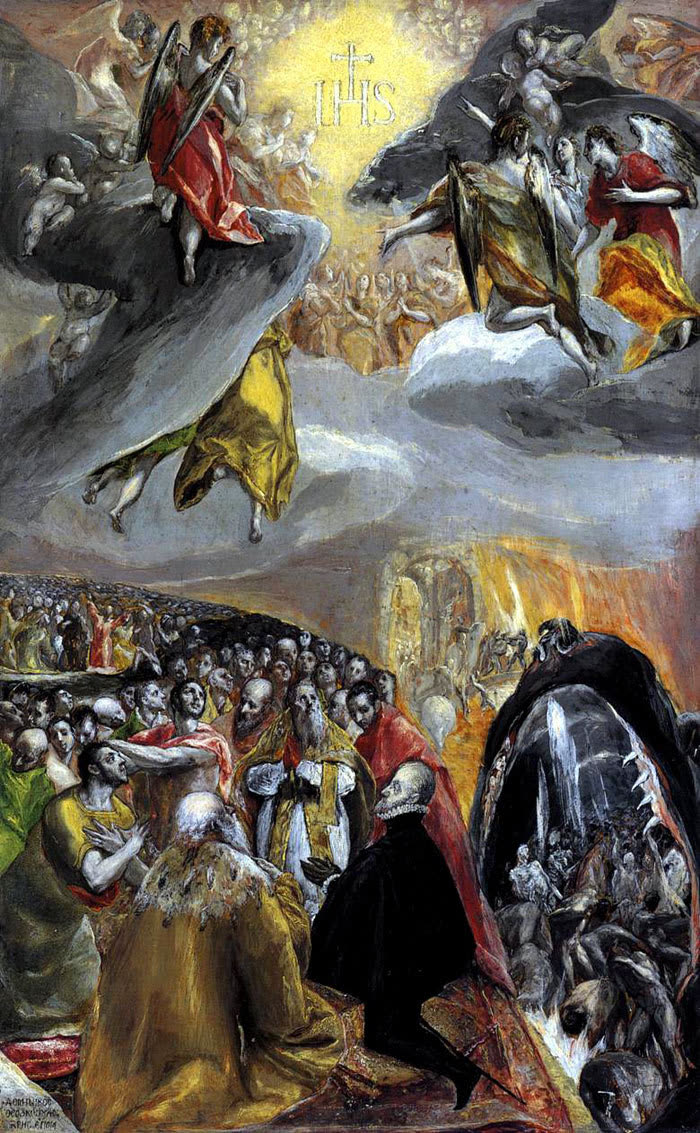
The Adoration of the Name of Jesus (El Greco)
The Invocation of the Most Holy Name of Jesus
Bishop Johann Michael Sailer writes about the invocation of the Most Holy Name of Jesus: Every one who calls upon the name of the Lord will be saved. (Rom 10,13) This is the promise of all promises, because it excludes no one who calls upon the name of the Lord, and promises to everyone the highest good. […] This promise does not let us expect some small gift, but the highest good: whoever calls upon the name of the Lord will be blessed. Blessedness, the highest good of man, comes from the Lord, who is rich for all.
If the one Lord, who is rich for all, is to give, then the needy must surely accept what is offered to them. Whoever does not recognize his sins, his misery, his poverty, or does not want to give honor to the name of the Lord and allow himself to become rich through Him, does not call upon the Lord as his Lord; he therefore despises the gift of His hands, remains poor and wretched, remains a sinner and keeps the curse of sin, remains without love and without blessedness. But whoever recognizes his sin and his poverty in love and blessedness, who in Christ recognizes his Lord, who is rich for all, will surely also say to Him: You who are rich for all, be so for me too! Teach me to love as You have loved. Be also my salvation and make me blessed in love! He speaks thus and receives one gift after another, and can love his Lord and in Him be blessed in love.
When we pronounce the name Jesus with reverence and love, we unite ourselves with our Redeemer and Savior, who, through the invocation of His Most Holy Name, is at once present Himself and touches and enriches our soul with His grace.5 For when we call upon His name, we also at the same time call down upon us His redemptive merits, which become powerful anew through this act of turning to our Lord and God.
When we once become truly aware of this, then this blessed truth will shine through our whole heart, and the royal way of invoking the Most Holy Name of Jesus will become the pulse of our life.
5 The power and glory of God are present and effective in His name. The name of God is the Godhead present: “Immanuel – God with us.” At the moment when one attentively and thoughtfully calls upon the name of God, one places oneself in His presence, opens oneself to His power and surrenders oneself as an instrument and offering into His hands. Such contact gives us a greater measure of supernatural life and of love of neighbor. Therefore the invocation of the Most Holy Name of Jesus has a very special sacramental character. (Ibid., p. 134)
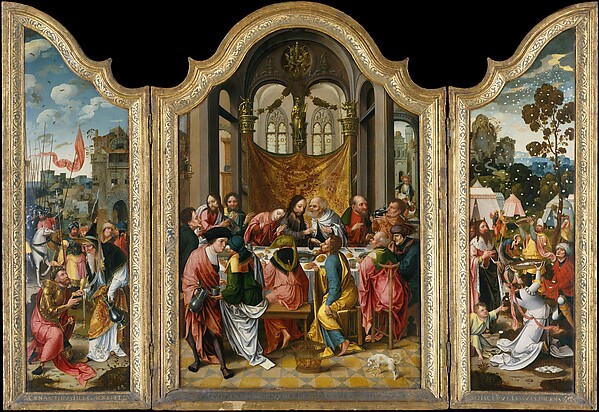
The Last Supper
Our soul is an upper room in which the Last Supper can be celebrated at all times. Secretly He says to us as once before: I have earnestly desired to eat this passover with you. (Lk 22,15)
In the visible Eucharist Jesus is offered under the forms of bread and wine. In the Eucharist within us He can be designated and named through His Most Holy Name alone. Therefore we can make the invocation of the Most Holy Name a spiritual communion.6
To call upon Thy name and to think of Thee is our desire. Is 26,8
6 Ibid., p. 67.
The light of the name of Jesus shines through the heart and so illuminates the whole universe. Fr. Sergius Bulgakov
The repetition of the name of Jesus is comparable to the beat of the wings of a bird that rises into the air. It must never be strained and forced, hasty or noisy. It must be delicate, light, and – in the deepest sense of the word – graceful. When the bird has reached the desired height, it glides on in its flight, and only from time to time does it beat its wings in order to stay aloft. Thus the soul too, which has taken the thought of Jesus into itself and is filled with the “thinking-of-Him,” can let go of the repetition of the name and rest in our Lord. When other thoughts threaten to crowd out the thought of Jesus, then begin the invocation anew, in order to gain fresh uplift.7
Love prayer, the conversation with the Lord. Everything depends on loving, on being in love with the Lord, with Christ, the Bridegroom. St. Elder Porphyrios
7 Im Namen Jesu ist Heil, p. 26.
He who believes in Me, as the Scripture has said, out of his heart shall flow rivers of living water. Jn 7,37 (RSV-CE 7,38)
The Jesus Prayer is like an invisible spiritual stream which unceasingly pours the power of God – His holy grace – into our soul from the ever-flowing spring Jesus Christ, and never becomes powerless; but in the measure in which our spiritual volume grows, it increases its streams of grace. Schemamonk Ilarion
From the rising of the sun to its setting the name of the LORD is to be praised! Ps 113,3
Peace and Reconciliation in the Most Holy Name of Jesus
In what way do we attain peace and reconciliation through the name of Jesus? Let us once more let our monk of the Eastern Church speak:
The name itself is a means of purification and perfection. A touchstone and a filter through which our thoughts, words and deeds must pass in order to be freed from their impurities. […] When we are tempted, the name of Jesus brings us victory and peace. A heart that is already filled with the name of Jesus and the presence of our Lord does not linger in any sinful thought or image. But we are weak, and often our defense collapses, and then temptation is like a roaring torrent. In such a case do not look at the temptation, do not wrestle with your own desire, do not look at the storm, and do not look at yourself. Look at our Lord, hold on to Him, invoke His Most Holy Name. When Peter walked toward Jesus over the water and saw the storm, he became afraid (Mt 14,30) and began to sink. If we, instead of looking at the waves and the wind, resolutely walk toward Jesus over the water, He will stretch out His hand to us and seize us. For all who call upon the name of the LORD shall be delivered. (Joel 3,5; RSV-CE 2,32)
The name of Jesus brings forgiveness and reconciliation. If we have sinned gravely (all the more if we have sinned lightly), we can in a moment, in repentance and love, turn to the Most Holy Name and pronounce it from the whole heart, and the name so used (through which we reach the person of Christ) will already be a sign of forgiveness. After sin we do not want to wait idly, postpone and hesitate. Let us not hesitate to take up the invocation of the name again, although we are unworthy.8
Through the invocation of the Most Holy Name of Jesus a very special process of purification begins in our soul, which brings everything unclean and unholy to light, so that our heart can be healed. St. John Chrysostom writes: The remembrance of God opens up to the soul what is within it. First the evil in its heart becomes conscious to it, later also the good. At first the remembrance of God sets all the power of the devil in motion, then gradually tames it. Thus prayer can uncover the sin dwelling in us and then also blot it out.
8 Im Namen Jesu ist Heil, pp. 34, 42–44.
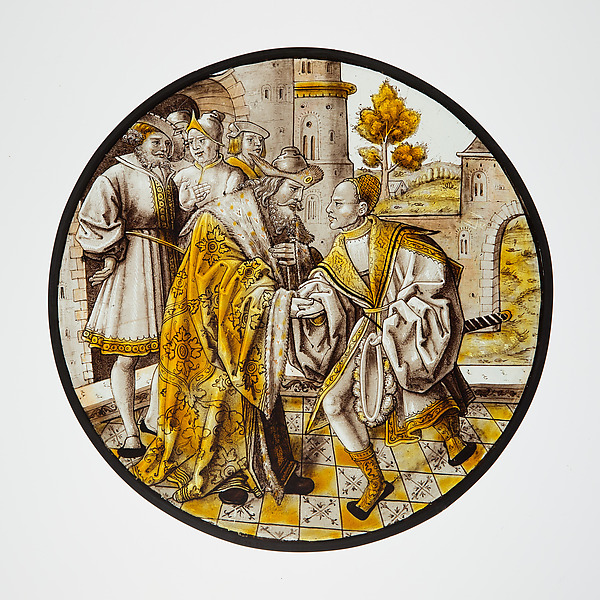
Christ and the prodigal son
The name of Jesus Christ penetrates to the depths of the heart, subdues the adversary who reigns there, frees and enlivens the soul. On this way of purification the sacrament of reconciliation is of utmost importance for our spiritual growth.9
When in the evening examination of conscience we kneel down like the prodigal son at the feet of the Heavenly Father and say: I am not worthy to be called Your child (Lk 15,19) and freely submit ourselves to the judgment of God, in order to give God the honor that is due to Him, then our angel will step to our side. He shows us the fullness of God’s mercy, the fullness of gifts and graces that were granted to us and we ask ourselves:
How have we used the talent that was entrusted to us – whether the gift to educate, to lead, to advise, to help, to heal or to love? Does not our life consist of nothing but “negligences,” of nothing but “wanting to do” and “not having done”? Then the tears of repentance fall from our eyes, and we pray:
9 Receive the sacrament of penance always with zeal, trust, esteem and inner sorrow for your sins. This means of grace causes the devil great terror, and he takes great pains to keep souls from it or to bring them to receive it lukewarmly, out of habit, without repentance and the other necessary conditions. (Mary of Ágreda, Leben der Jungfrau und Gottesmutter Maria, Vol. 4, p. 212, Jestetten 1982, Imprimatur: Archiepiscopal Ordinariate of Salzburg, May 31, 1954, No. 1311)
Depart from me, for I am a sinful man, O Lord! Lk 5,8
But God always fills up the measure of His deeds, of His love for us. He bends down to us and takes our measure. There lie upon our small shards the drops of blood of our Lord, the drops of sweat of the agony of our Lord, with which He has covered all our guilt and our inability. And there lies the Immaculate Heart of our Mother, whose children we are. And the Mother’s heart is so great and wide that it fills the measure to the brim, and on top of it our angel adds his Sanctus, which he prays continually with us and for us, until the measure is full to overflowing.
And God does the incomprehensible. He accepts it as if it were from us and embraces us full of love in His arms, like the prodigal son.
(After an early Christian saint)
If your soul repeats these seven words with reverence and longing: “Lord Jesus Christ, have mercy on me,” it will never be sated! Say them all your life! They hold so much sap! St. Elder Porphyrios
Do Everything in the Name of the Lord Jesus
In his school of the prayer of the heart, Theophan the Recluse advises us: Work and while working say the Jesus Prayer, that God may bless you.10 The main thing is to walk before God or to live under the gaze of God, in the awareness that God sees us, that He seeks our soul and our heart. This awareness is the strongest lever in the whole mechanism of spiritual life. For the Jesus Prayer is a lamp for our steps and a guiding star on our way to heaven.11
To do everything in the name of the Lord means to be entirely oriented to His glorification, to strive to do everything to His pleasure, because it is His will. That means: to envelop all action in prayer, to begin it with prayer and to end it with prayer. When we begin, we ask for God’s blessing; in the course of the work we call upon His help; and at the end we thank Him that He has deigned to fulfill His work in us and through us.12
Think in me, O Jesus, then I think bright and clear. Speak through me, O Jesus, then I speak gently and truly. Work through me, O Jesus, then just is my doing, hallowed my work, hallowed too my rest. Pervade my whole being, fill all my being, that from me may be read Your great love.
10 The name Jesus can be used alone or joined to a more or less short sentence. Among the Christians of the East the most widespread form is: “Lord Jesus Christ, have mercy on me!” Simpler still: “Jesus Christ” or “Lord Jesus.” The shortest form of the invocation is the name “Jesus” alone.
11 Prayer is action; whoever prays is active to the highest degree. Of no prayer is this more true than of the Jesus Prayer. The properly practiced invocation of the name draws each person more deeply into his work; each becomes more capable in his action and, at the same time, not isolated from others but connected with them. He becomes more sensitive to their fears and worries as never before. The Jesus Prayer makes each person a “person for others.” (Hinführung zum Herzensgebet, p. 72)
12 Schule des Herzensgebetes, Die Weisheit des Starez Theophan, Salzburg 1985.
Whatever you do, in word or deed, do everything in the name of the Lord Jesus, giving thanks to God the Father through Him. Col 3,17
Lifetime Is a Time of Grace
The salvation that God wants to give us already in this life is always bound to the right hour, which never returns. For thus says the LORD: In a time of favor I have answered you, in a day of salvation I have helped you. (Is 49,8)
Our years are like crystal bowls that God lends us. But we must fill them and return them filled into the hands of God, who keeps them for us in eternity.
- At the beginning of the day let us give God the first moment and give our day’s work its direction toward Him who is Lord of all time and Father of eternity: Everything for the honor of my God!
- Happy are all who place themselves daily, through the sign of the cross and the practice of the prayer of the heart, under the protection and the security of the love of God.
- Happy are the parents who take the time to give their children the example of prayer, in order to teach them conversation with God. They will find joy in them.
- Happy are the young people who, through contact with Jesus, keep Him in their hearts and go through life radiantly for Him, under the maternal hand of Mary. Their prayer is: Make me more like You! Let Your radiance rest on me and make me a radiating force for good in my surroundings.
One thing more I would like to lay on the hearts of my dear children: that they always keep their hearts open to the Savior and never let shyness toward Him keep them at a distance. We all sin, for we are human; but if we do not turn to Christ with trust, to whom shall we go, and whom shall we trust?
From the last admonitions of Friedrich Leopold Stolberg (1750–1819) to his children
Asking and Giving Thanks in the Name of Jesus
In the Gospel of John Jesus promises us several times that He will hear our petitions when we appeal to His name. Whatever you ask in My name, I will do it. (Jn 14,13)
But how often have we asked and, by our human reckoning, apparently not been heard? Yet if we are honest, we must ask ourselves: Have we truly prayed in the name of Jesus? That is, have we, together with Jesus, placed our will into the will of the Father? The disciples, at any rate, had to hear the word of Jesus: Hitherto you have asked nothing in My name. (Jn 16,23) And we know a little of the petitions of the Apostles, who were concerned with earthly kingdoms and wanted to avoid suffering. If our praying goes in the direction that we want nothing other than that God’s will and His promises be fulfilled in us entirely, then the smallest prayer and the quietest petition find a hearing. This is the confidence which we have in Him, that if we ask anything according to His will He hears us. (1 Jn 5,14) God longs deeply to pour out His gifts upon us. And what gift could be greater than His divine and most holy will? Let us therefore never tire of praising God, of asking Him for His help and grace, and of thanking Him from the whole heart. For every thanks is like a new petition, through which we receive still further graces. In this sense the Apostle Paul impresses upon us: In everything, by prayer and supplication with thanksgiving, let your requests be made known to God. (Phil 4,6)
Abba, dear Father, hear me for the sake of the name of Jesus, Your beloved Son!
In the very second that the human spirit sets itself in motion to pray, divine grace visits it. St. Elder Porphyrios
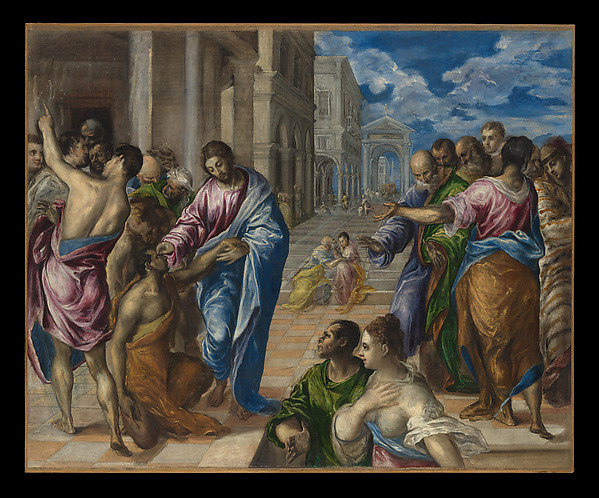
Christ heals a blind man
Healing and Liberation in the Name of Jesus
To strengthen us in faith and to protect us from evil, the world-renowned exorcist Fr. Gabriele Amorth recorded many of his experiences in writing: Today there is a large number of priests and even bishops, Fr. Amorth reports, who no longer believe in the devil and in exorcism. If one tells them that Jesus healed numerous possessed people, they reply that the word “possessed” is an expression derived from the language and culture of that time, which designated as demon-possessed those who in truth were merely sick. But the Gospel distinguishes quite clearly between the two conditions: Jesus heals the sick and frees the afflicted from demons.
Accordingly the risen Lord grants two different powers: These signs will accompany those who believe: In My name they will cast out demons […] they will lay their hands on the sick, and they will recover. (Mk 16,17)
Not only exorcists commissioned by the bishop can free afflicted souls from demonic influence, but also all those who believe in the name of Jesus with their whole devotion, as the Lord says in the Gospel. We know of many saints whose union with Christ drove away evil. Let us think only of St. Benedict or of St. Catherine of Siena; for it is always Jesus Himself who drives out Satan. Fr. Amorth repeated a thousand times: With fear and trembling I earnestly invoke Your holy name, that You may give me a firm faith and the power to attack this demon with certainty and faithfully to Your command, and to drive it out in the strength of Your arm. Therefore I ask in Your name, Jesus Christ, You our Lord and God …
St. John Vianney, the Curé of Ars
Fr. Amorth explains further: The power of the enemy has always remained the same, for the devil has always the same power. What has enormously increased, however, is the number of doors that have opened to his entry: magic, occultism, spiritism, and also a life in grave sin. Or think of all the people who consecrate themselves to Satan.
He distinguishes two categories of victims of the demons: on the one hand those who, without their own guilt, because of their love of God, bear malicious disturbances up to possession borne as reparation, like St. John Vianney, the Curé of Ars, or St. Mariam Baouardy, but also people who become innocent victims through curses; on the other hand those who deliver themselves over to the power of the demons through their own transgressions, whether through persisting in grave sin, as, for example, Judas, or through occult practices. Therefore, as Fr. Amorth teaches, the most important means in the struggle against the devil are: Holy Confession, Holy Mass, Holy Communion, Eucharistic Adoration, the Psalms and the Rosary. Only when these means have been exhausted did he, as an exorcist, use the official prayers that aim to drive out Satan in the name of Christ. I have performed, roughly calculated, more than seventy thousand exorcisms, and I was always gripped by great compassion, for I encountered cases of immeasurable suffering. Although exorcism is a very demanding priestly ministry, it is also a rewarding task, for the priest experiences how in the name of Jesus people are freed who could not be healed by any doctor. Here we may think of the words of Holy Scripture: Power came forth from Him and healed them all. (Lk 6,19)13
If you have a great love, and if this love drives you to prayer, then the floods of your love will pour out over the one for whom you pray, and they will work in him and be a protective shield around him. In this way you influence him and lead him to the good. When God sees your effort, He grants you His grace in abundance, as well as to the one for whom you pray. St. Elder Porphyrios
Prayer for Healing and Protection
Lord Jesus Christ, we thank You for Your love for us. Shelter us all in Your wounds and grant us Your salvation. Lord, we ask You, mark us with Your seal and Mary’s seal, that we may be preserved from all attacks of the Evil One and from all harm. From curses, imprecations, possession, melancholy, depression and fear – deliver us, O Lord!
You tell us again and again: Do not be afraid, I am with you. Therefore we need have no fear.
We ask You, O Lord, through the intercession of the Most Blessed Virgin Mary, grant us deliverance from every curse and imprecation and gladden us at all times with Your peace. Lord Jesus Christ, You are full of love for us human beings and You have all power in heaven and on earth. Touch us with Your healing love. Heal everything in our hearts, in our souls, that is injured and wounded. Heal all the memories of our lives that hurt us. Heal all the wounds that other people have inflicted on us. Heal everything that is injured and wounded. Lay Your pierced, healing hands on all our wounds of soul and body, until they are completely healed. Lord Jesus Christ, You also know all our bodily illnesses. Touch them with Your healing power, with Your healing warmth, and make whole all our organs that are ill. For You are the Savior of the whole world!
Father in heaven, in the name of Jesus, Your Son, we ask You, grant us Your fatherly love in abundant measure, and let us feel this love now also in our hearts. Amen.14
13 Cf. Triumph des Herzens, 26th year (I) 2019 / No. 152.
14 This freely formulated prayer by Fr. Klaus Müller (1946–2001) was recorded afterward. His life was that of a saintly priest. Many miracles have occurred through his prayer and intercession. He had many charisms, which he bestowed abundantly on those who sought help. For protection from all evil and for a future secure in God, from 1994 he marked on the forehead with the seal of God all people who asked him to.
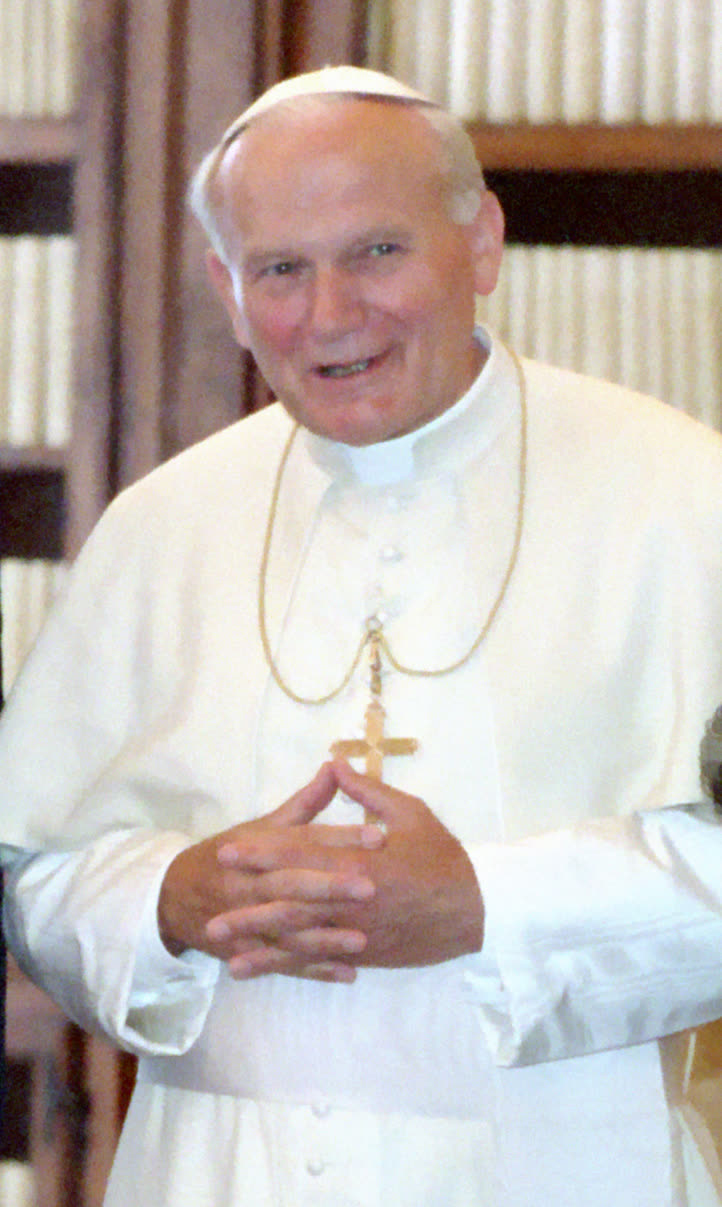
Pope John Paul II
On the Trail of the Book of Revelation
A few weeks before his election as pope, Pope John Paul II spoke these prophetic words:
We stand before the greatest battle that humanity has ever seen. I do not think that the community of Christians has fully grasped this. Today we stand before the final struggle between the Church and the anti-Church, between the Gospel and the anti-Gospel.17
17 There will be a counterfeit church. One church will be the Church of Christ, and the false prophet will build the other. The false church will be worldly, ecumenical and global. It will be a loose association of churches and religions. […] The false church will be emptied of all divine content; it will be the mystical body of the Antichrist. (Archbishop Fulton Sheen, Der Kommunismus und das Gewissen der westlichen Welt, Berlin 1950)
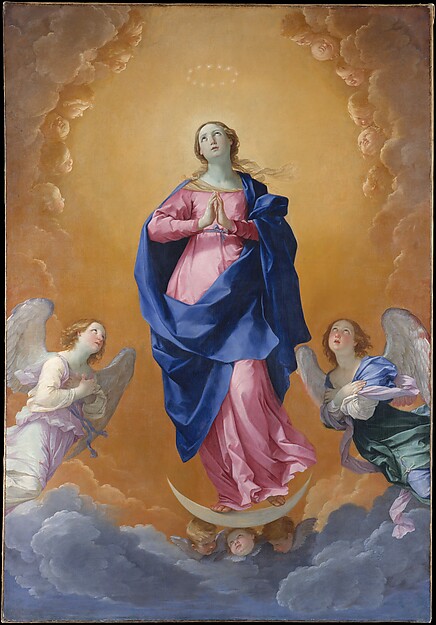
The Woman Clothed with the Sun
The Church of the Redeemer and the Dragon
In this transitory life we find ourselves in a spiritual struggle, which is followed with the greatest attention on the one hand by God and countless angels and saints of heaven, and on the other hand by Satan and his whole following. Only with the decisive difference that heaven does everything to win us for eternal love, and hell wants to plunge us into eternal hatred.18
18 Since this enemy is a pure, incorporeal spirit, whom no activity tires, he is so eager in the persecution that he begins with it from the first moment of a human being’s existence in the mother’s womb, and does not give up the struggle until the soul is separated from the body. […] He makes use of our senses, powers of the soul, inclinations and passions for this. “My daughter, it is impossible to describe the envy, the malice and the cunning of Lucifer and his demons against human beings. […] Just as heaven rejoices over every good work, so there is joy in hell among the evil spirits when human beings sin.” (Leben der Jungfrau und Gottesmutter Maria, Vol. 4, p. 192, pp. 209–210)
In the Book of Revelation St. John describes the struggle of Satan19 against the People of God as a struggle between a fiery red dragon (Rev 12,3), to whose aid comes a monstrous beast from the sea (Rev 13,1) with ten horns and seven heads, and a second beast (Rev 13,11) that comes up out of the earth, which has two horns like a lamb but speaks like a dragon. They fight against the People of God, which is described as follows:
And a great portent appeared in heaven, a woman clothed with the sun, with the moon under her feet, and on her head a crown of twelve stars; Rev 12,1
The Church, the People of God, is symbolized by the Holy Virgin Mary, the Mother of the Church. Here the thread running from the beginning of the Bible is carried on:
I will put enmity between you and the woman, and between your seed and her seed. Gen 3,15
19 When the angels expressed their will, it applied forever. With their intellect they saw all the consequences and agreed to them. Tradition holds that pride in Lucifer [Satan] and his followers was so powerful that they preferred the ego – “I am I,” said Lucifer – and then, in the midst of this trial, one of the lowest angels, St. Michael, who belonged to the second-to-last choir, said: “Qui ut Deus?” – “Who is like God?” And with this humble word St. Michael threw Lucifer and his followers out of heaven into the abyss. (Christus vincit, Bishop Athanasius Schneider in conversation with Diane Montagna, Kißlegg, 2020, p. 416)
This struggle between Satan and Mary is fought out on earth by proxy, through the Church and through the powers hostile to God and to the Church: the red dragon in the form of Marxist communism, and the two beasts, Freemasonry and the ecclesiastical Freemasonry that has infiltrated the Church.20 The latter is the beast with two horns that resembles a lamb, which has penetrated even into the highest ranks of the Church.21 Its main aim is the destruction of the Roman Catholic Church through a false ecumenism, with the goal of founding a universal church that is formed by the union of all Christian denominations.22
20 St. Maximilian M. Kolbe was one of the most resolute opponents of Freemasonry and of international Zionism, because he clearly recognized their diabolical tactics in their struggle against the Catholic Church: The leading, the greatest and the most powerful enemy of the Church is Freemasonry. (Maria – Der Eckstein by Dr. med. Hans Salmen, Lauerz 1995, p. 51.)
21 Already in the year 1846 the Mother of God wept at La Salette over the state within the Church and the great apostasy of faith, of which she spoke to the two shepherd children: The heads, the leaders of the People of God, have neglected prayer and penance, and the demon has darkened their understanding. […] The number of priests and religious who separate themselves from the true religion will be large; among these persons there will even be bishops. […] The Church will go through a terrible crisis. Since the holy faith in God has been forgotten, each one wants to lead himself and to stand above his fellows. (Ibid., pp. 150–153)
22 The Blessed Anne Catherine Emmerich (1774–1824) also saw this lamentable state: They are building a strange church, a true community of the unholy! The sheepfold is burning at every corner! And the shepherds! I saw an enormous crowd of people busy tearing down St. Peter’s Church. But I also saw others who were repairing it again. […] There were especially many members of sects and apostates among them. As if by rule and regulation, people were tearing it down who wore white aprons with pockets edged with a blue band and had masons’ trowels stuck in their belts. […] To my horror, Catholic priests were also among these Freemasons. (Ibid., p. 28)
The main aim in this is the elimination of the Holy Sacrifice of the Mass, the abolition of the Most Blessed Sacrament of the Altar, in which Jesus Christ is present concealed and veiled, with divinity and humanity.23
The Eucharist is the divine lightning rod that turns away the bolts of divine justice. Just as a tender, loving mother presses her child to her breast, wraps her arms around it and shelters it with her body, to save it from the wrath of an angry father, so Jesus multiplies His presence everywhere. He covers the world and embraces it with His gracious presence. St. Peter Julian Eymard
23 Cf. Der letzte Kampf zwischen Licht und Finsternis by Paul Josef Jakobius, Altötting 2010.
The Mark of the Beast
Also it causes all, both small and great, both rich and poor, both free and slave, to be marked on the right hand or the forehead, so that no one can buy or sell unless he has the mark, that is, the name of the beast or the number of its name. […] Its number is six hundred and sixty-six (666). If any one worships the beast and its image, and receives a mark on his forehead or on his hand, he also shall drink the wine of God’s wrath. […] Here is a call for the endurance of the saints, those who keep the commandments of God and the faith of Jesus. Rev 13,16-18; 14,9-12
Already more than two thousand years ago St. John the Apostle warned of an all-encompassing surveillance of humanity by the beast and its false prophet, whose name is the biblical number 666, the one who is also known as the Antichrist. Whoever asks in the light of the Holy Spirit with a sincere heart about the meaning of this prophetic scripture will certainly discover the truth in view of world events. For the plan to establish a new world order (novus ordo saeculorum)24, which is shaped by antichristian laws and ideologies, combined with an ever-increasing surveillance of humanity and the restriction of its fundamental rights, reveals itself ever more clearly.
When one asks why evil could gain the upper hand in such a threatening way, we need only look at the history of salvation. As soon as man separates himself from God and becomes entangled in grave sin, he leaves the zone of God’s protection that the commandments guarantee and delivers himself to the machinations of evil and thus to his misfortune. Already in the Old Testament God laments sorrowfully through the mouth of the prophet:
O that you had hearkened to My commandments! Then your peace would have been like a river, and your righteousness like the waves of the sea. Is 48,18
24 The term novus ordo saeculorum is the ideological and programmatic code of the one-world government. Freemasonry formulates as its essential and ultimate goal the establishment of a novus ordo saeculorum, a new social and political order on a global level, in order to impose upon people, in a dictatorial way, religious indifference and syncretism (mixing of different religions), moral perversion and radical anti-Christian and above all anti-Catholic politics. Such a new social order ultimately aims at the veneration and adoration of man, the most radical form of atheism. (Christus vincit, p. 285)
Most people in the formerly Christian Occident have, in the last decades of prosperity, become blind to the true faith and have created gods of their own: possessions, money, pleasure, the self-centered ego25 and the endless series of vices and sins connected with them.26 After her conversion the famous dentist Gloria Polo declared: When we sin, we shop in the devil’s supermarket, and we must pay dearly for these goods.
25 St. Thomas Aquinas explains in his Summa theologiae, I-II, q. 77, a. 4: Inordinate love of self is the cause of every sin. And for St. Catherine of Siena self-love is the source of every evil and the ruin of all good. The struggle against this fundamental vice runs through her whole writing. Self-love reigns where the love of God and the love of neighbor are not practiced and the ego stands at the center (egoism, self-seeking).
26 On the wrong developments of our time Gabriele Kuby writes: They are directed against the nature of man and against the family. Children are prevented; children are killed before birth if they are not wanted; children are produced in the laboratory if they are wanted; children are cheated of their origins; children are frozen as embryos and used by research; children are carried in a rented womb; children are bought and raised by same-sex couples; children are handed over from infancy to collective care by third parties; children are sexualized already in kindergarten; children are delivered to pornography; children become victims of divorce; children are robbed of their freedom. A society so weakened has no future – unless it returns to God. (Kirche heute, No. 11, 2020, pp. 10–12)
But the consequences of sin (suffering) also strike the innocent who, like Job, the innocent children of Bethlehem and many others, are included in a special way in the work of redemption together with the innocent Lamb of God.
If we now ask what we can do in this extremely grave time for ourselves and on behalf of the whole of humanity, Holy Scripture advises us to do what pleases God most:
Conversion, prayer, penance! Penance means to accept all the small daily crosses and also to perform one’s work in the spirit of penance. Words of the Mother of God at Montichiari, 1947
If My people who are called by My name humble themselves, and pray and seek My face, and turn from their wicked ways, then I will hear from heaven, and will forgive their sin and heal their land. 2 Chr 7,14
There is also the question of what happens to the believers who do not submit to the antichristian and dictatorial laws and who therefore are penalized in social life.
The Bible gives the answer: Rise and measure the temple of God and the altar and those who worship there, but do not measure the court outside the temple; leave that out, for it is given over to the nations, and they will trample over the holy city for forty-two months. (Rev 11,1-2)
That the temple is measured and those who worship in it are counted means that in the persecution of the end time the Christian community, the little flock, the rest of Mary’s offspring, will stand under the special protection of God. (Cf. Rev 12,17)
Much also points to the fact that in this time similar miracles will happen as the Israelites experienced when they left Egypt.27
Let all who take refuge in Thee rejoice, let them ever sing for joy; and do Thou defend them, that those who love Thy name may exult in Thee. Ps 5,12 (RSV-CE 5,11)
27 Cf. Der letzte Kampf zwischen Licht und Finsternis.
When you are sick and in pain, when you are plagued by sinful thoughts and doubts, then either speak the name of Jesus forcefully or think of Him. In dangers, in fright, at home or on the way, wherever you are, speak the name of Jesus, the name of our Redeemer, not only with the mouth but also with the heart and with reverence, for this name gives strength. St. Lawrence Justinian
In Our Lady’s Army
The woman clothed with the sun, as she is described in the Book of Revelation, advances as the archetype and Mother of the Church at the head of the army against the hostile powers. With motherly love she protects her children, who still stand in the midst of the trial of this earthly life. But we must not forget that Mary, in this great battle in which the salvation of so many immortal souls is at stake, also needs our help.
In September 1961 the postulator of the beatification process of Jacinta and Francisco brought an important message from Sister Lucia, whom he visited with the permission of the Holy Father at the Carmel of Coimbra. Sister Lucia was very saddened and spoke of the deep sorrow of the Mother of God, because so few concern themselves with her message of 1917. Even the faithful pay too little attention to her instructions, and the wicked continue on the path of perdition. Father, tell everyone what the Mother of God has often said to me: Many nations will disappear from the face of the earth. Russia will be the scourge that God chooses to punish mankind, if we do not obtain the grace of conversion through our prayer and the sacraments.28 Further, the Mother of God explained to Sister Lucia that the last aids given to the world are the Rosary29 and devotion to her Immaculate Heart. In these words of the Mother of God the core message of Fatima shines forth anew for us: One must no longer offend God, Our Lord, who has already been so greatly offended. (October 13, 1917)
The Rosary causes virtue and works of piety to blossom anew. Through it, souls receive the fullness of divine mercy. It will convert hearts, and they will begin to despise earthly things, to love heavenly things, and to make rapid progress. Many souls will be saved through the Rosary. From the promises of the Mother of God to Blessed Alan de la Roche
It is My most ardent wish that veneration of and devotion to the Immaculate Heart of Mary be spread, because this Heart is the magnet that draws souls to Me, the hearth of fire that sends the rays of My light and My love out over the whole earth, and the unfailing spring that causes the living waters of My mercy to flow down upon the earth. Words of Our Lord Jesus Christ to Sister Lucia
28 Know, my daughter, that all the sacraments entrusted to the holy Church, especially the Holy Eucharist, are mighty weapons to thwart the hellish attacks and to strike terror into all the devils. Precisely for this reason my most holy Son instituted them. But if today souls no longer experience this power and effect, the reason lies in the fact that they lack the right reverence and esteem with which they should treat and receive them. Be assured: those souls who receive the holy sacraments with devotion and reverence are terrifying to the hellish spirits. They possess a great and mighty power over Satan. (Leben der Jungfrau und Gottesmutter Maria, Vol. 4, p. 351)
29 When Cardinal Kracziwitz, in 1981, was with some priests and faithful in audience with Pope John Paul II, the Holy Father took out the Rosary and said: “This is the exorcism that even the laity can pray.” Those present were surprised – then the Pope said: “So that there be no doubt: I confer upon the Rosary the power of exorcism!”
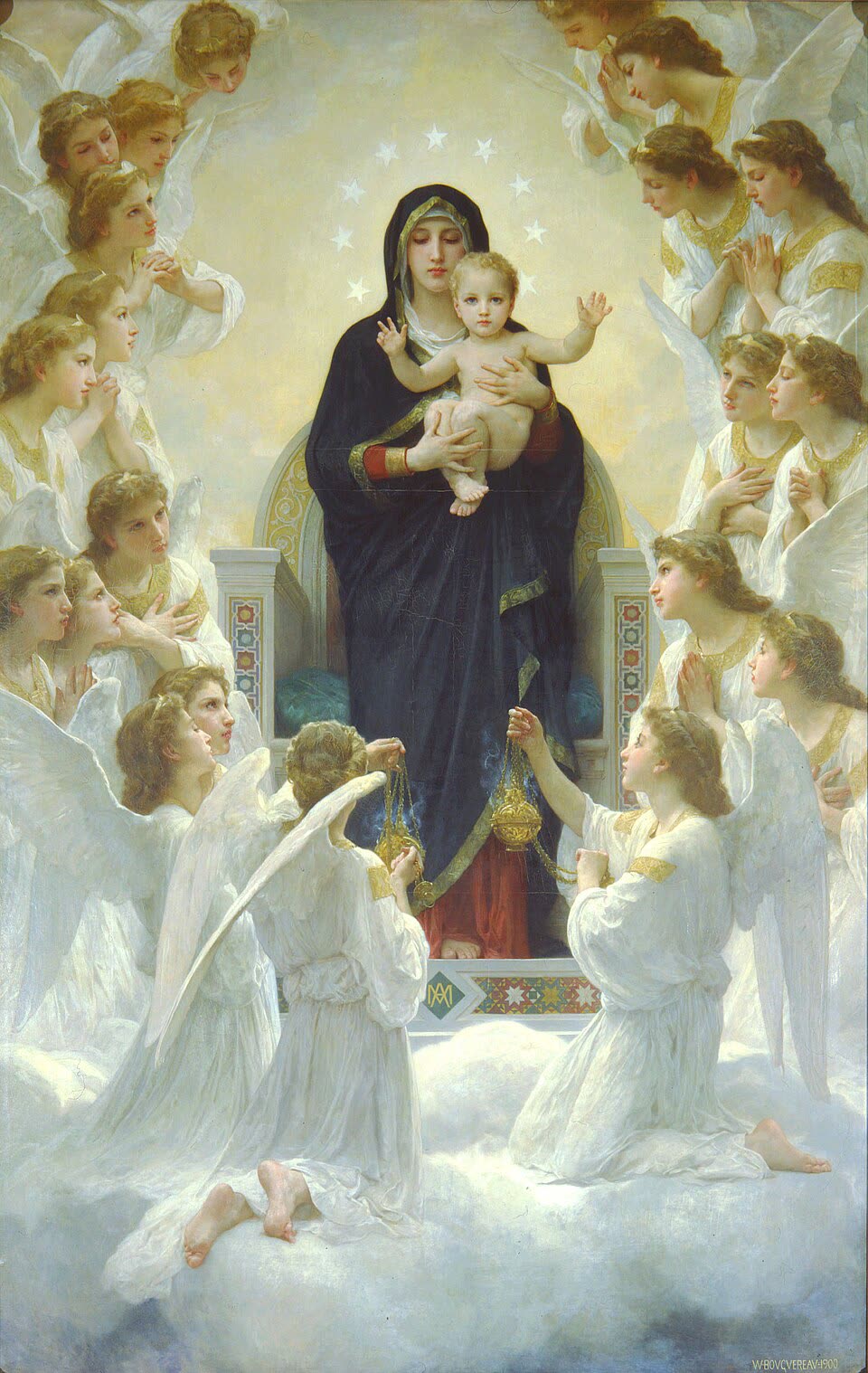
Mary, Queen of the Holy Angels
To the Queen of the Holy Angels
August Queen of Heaven and sovereign Mistress of the Angels, You received from God, from the beginning, the power and the mission to crush the head of Satan. Therefore we humbly beg You: send the heavenly legions to our aid, that under Your command they may pursue the demons, combat them everywhere, repel their bold attacks and drive them back into the abyss. Who is like God? O good and tender Mother, You will always be our love and our hope! O Mother of God, send us the holy Angels, that they may defend us and keep the cruel enemy far from us. Holy Angels and Archangels, defend and protect us! Amen.30
30 On January 13, 1864, the founder of the Congregation of the Servants of Mary, Fr. Cestac (1801–1868), in the shrine of Our Lady of Refuge in Anglet (Pyrenees), was suddenly shaken as if by a ray of divine clarity. He saw the demons spread throughout the whole world and causing unspeakable harm everywhere. At the same time he had a vision of the Most Blessed Virgin Mary, who told him that the demons were indeed unleashed throughout the whole world. For that reason the hour had come to invoke her as Queen of the Angels and to ask her to send legions of holy angels to fight the powers of the underworld. “My Mother,” said the priest, “You are so good; could You not send them without being asked?” – “No,” answered the Most Blessed Virgin, “prayer is a condition set by God, even when one wishes to receive graces.” – “If that is so, my Mother, would You then teach us how one must pray?” Thereupon he received from the Most Blessed Virgin the prayer “August Queen,” and spread it throughout the whole world after episcopal approval. This prayer, accompanied by extraordinary graces, was recommended by Pope Pius IX and enriched with a plenary indulgence by Leo XIII and Pius X.
When you learn that this earthly life is more a drifting on waves, wind and weather than a walking on firm land: do not turn your eyes away from the light of this star, lest you sink in the storms.
When the storm winds of temptations rage, when you are driven between the cliffs of tribulations, look up to the star, call upon Mary! When the waves of pride, of ambition, of slander, of jealousy lift you up – look up to the star, call upon Mary!
When anger, greed or the lust of the flesh shake your soul – look up to Mary!
When the burden of sins presses you down and the shame of your conscience confounds you, when the strictness of judgment frightens you, when you threaten to be swallowed up by the abyss of sadness and despair, think of Mary!
If she holds you, you will not fall. If she protects you, you need fear nothing. If she leads you, you will not grow weary. If she is gracious to you, you will reach the goal and will yourself experience how rightly it is said: And the name of the Virgin was Mary – Star of the Sea.
St. Bernard of Clairvaux
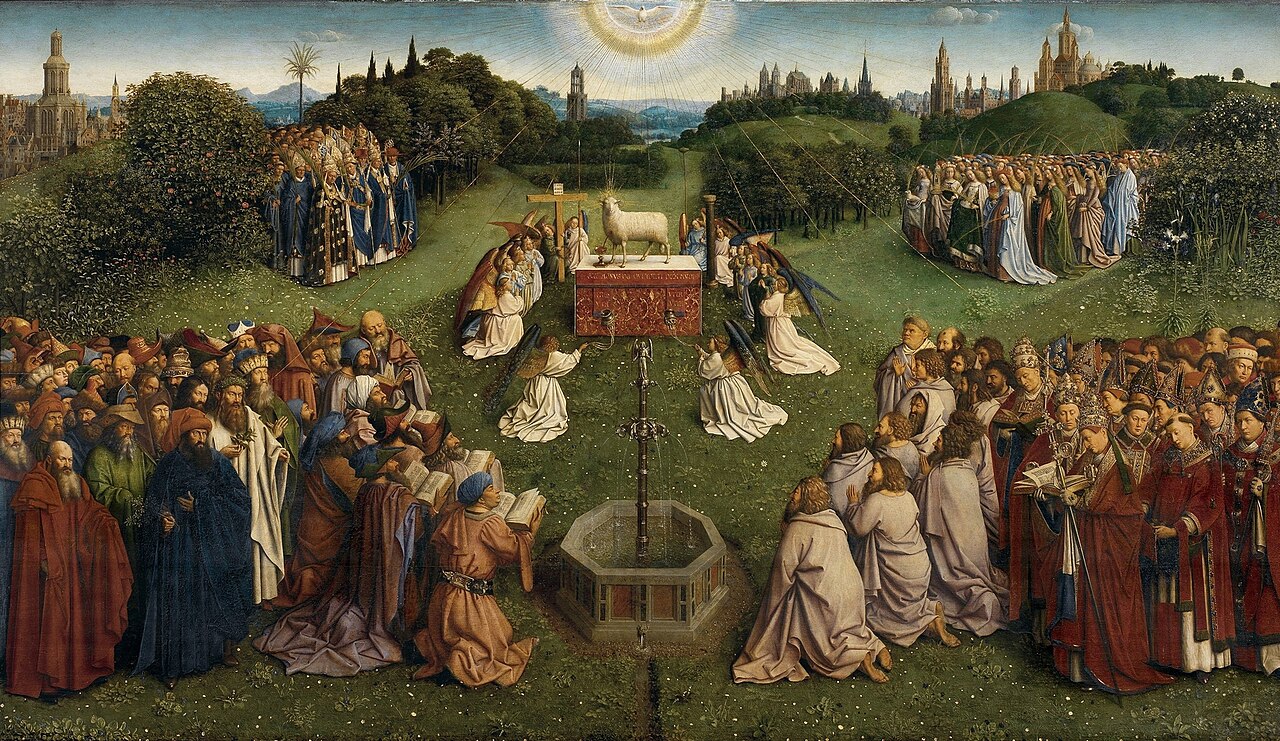
The Lamb on Mount Zion
The Kingdom of the Lamb
Then I looked, and lo, on Mount Zion stood the Lamb, and with Him a hundred and forty-four thousand who had His name and His Father’s name written on their foreheads. Rev 14,1
The number 144,000 symbolizes the totality of those who are saved and points to those Christians who follow the Lamb wherever He goes, that is, who lead a life of following Christ. Twelve is the number of the tribes of Israel, a thousand the number of fullness. On their foreheads John saw the name of the Father written, there where the servants of the beast bore the mark of the beast. The name of the Lamb, Jesus, seen here, whose number is 888, stands in contrast to the worshipers of the beast, who had the number 666 on their foreheads. As the name of the Father, John will have seen the name of the LORD (He Who Is) on their foreheads. The names on the forehead are symbols of the devotion of Christians to God and Christ. The impressed seal is thus the act of baptism, accepted in faith and therefore shaping the thinking (the forehead). Therefore there is also an allusion here to Christian baptism, which takes place in the name of the Father and of the Son and of the Holy Spirit. (Mt 28,19)
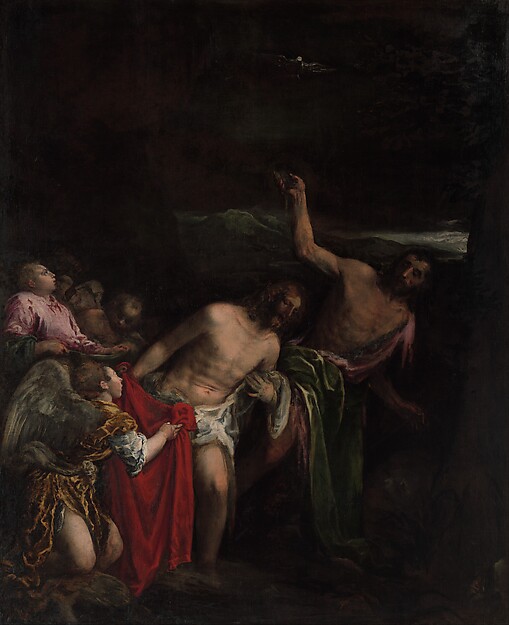
The Baptism of Christ in the Jordan
It is these who have not defiled themselves with women, for they are virgins; it is these who follow the Lamb wherever He goes; these have been redeemed from mankind as first fruits for God and the Lamb. Rev 14,4
In the Apocalypse the term “harlot” stands for idolatrous Rome. The opposite term “virgin” therefore means the faithful Christian people, who will one day be “wedded” to Christ. “Virgin” is thus used here in a spiritual sense: meant are all Christians, whether married or unmarried, who, as first fruits in terms of quality and not related to time, live in faithful devotion toward their future “marriage with God,” without committing “fornication” with the pagan gods through side glances or compromises. (Cf. Deut 5,6) They neither flirt with the false ecumenical church nor let themselves be influenced by esoteric currents or other religions.31
31 Cf. Die Offenbarung des Johannes by Dr. Ludwig Neidhart, Augsburg 2019.
When Holy Scripture promises us: Our help is in the name of the LORD, who made heaven and earth, (Ps 124) we may firmly trust that God will grant us in this spiritual struggle the grace to remain faithful to Him and to profess courageously the true Catholic faith. The more the name of God is blasphemed and dishonored, the more we want to glorify the Most Holy Name of the Lord through a Christian life and to call upon Him with trust.
And when we see or hear evil spoken or done or God blasphemed, let us speak well and do well and praise God Who is blessed forever. St. Francis
The Golden Arrow
May the most high, most adorable and ineffable Name of God be praised, blessed, loved, adored and glorified forever, in heaven, on earth and under the earth, by all creatures that have come forth from the hand of God, and through the Most Sacred Heart of Jesus in the Most Holy Sacrament of the Altar. Amen.32
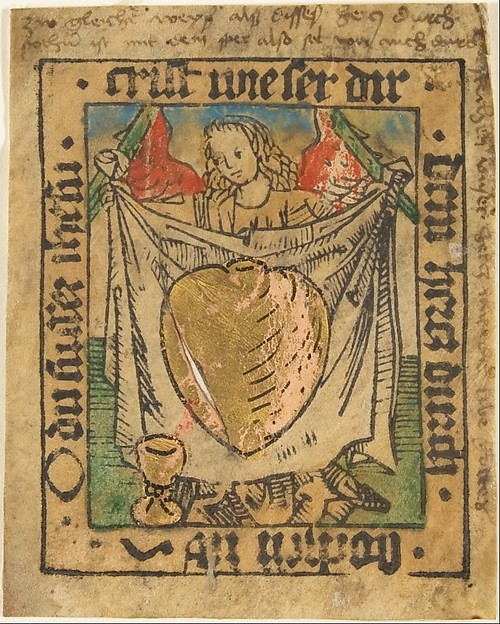
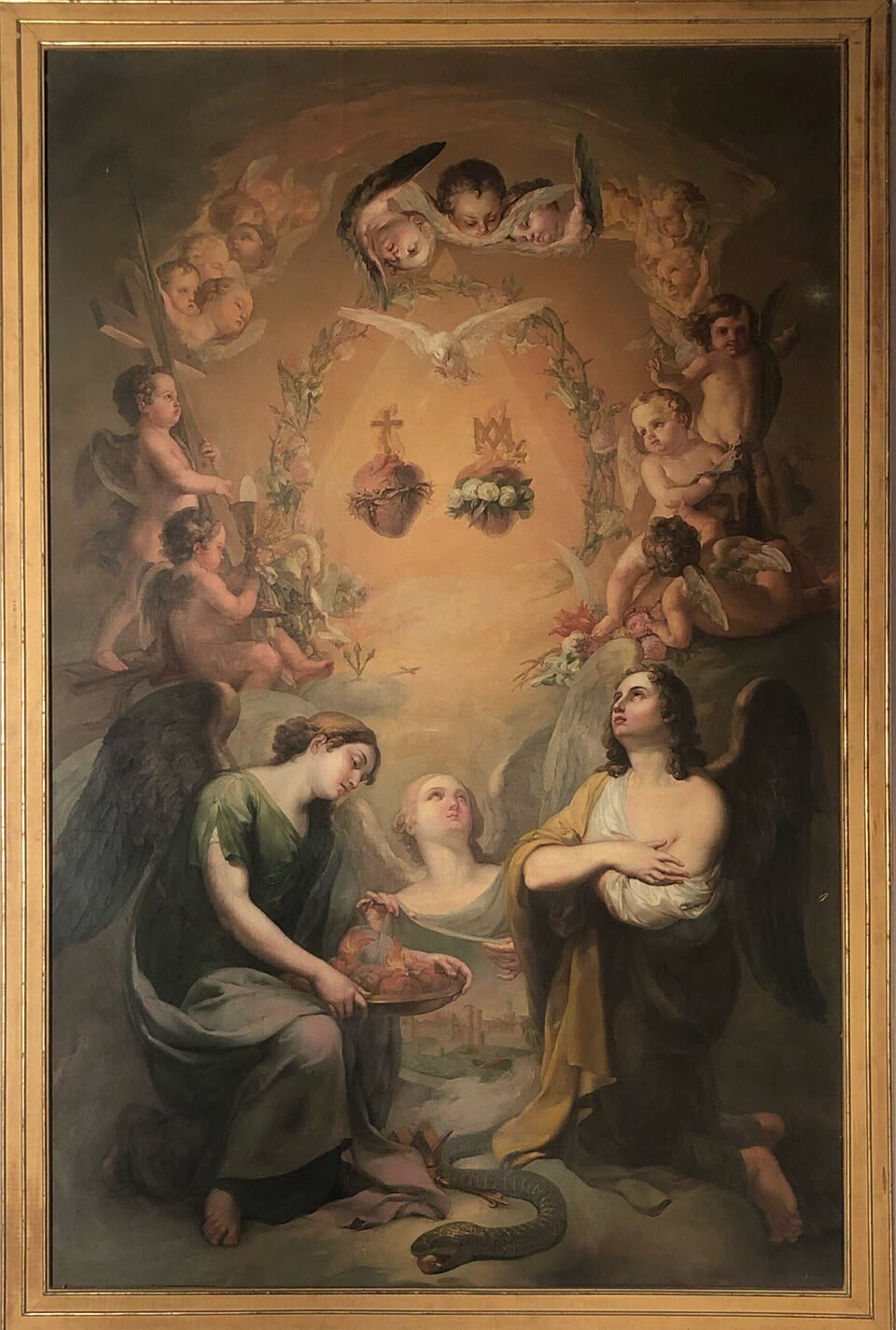
The Veneration of the Most Sacred Heart of Jesus
Indulgenced Prayer to the Most Holy Name of Jesus
Good Jesus, according to Your great mercy, have mercy on me! Merciful Jesus, by the Precious Blood that You shed for sinners, I beg You: wash me clean of all my iniquities and look graciously upon me, a poor, unworthy person! I call upon Your Most Holy Name. Save me, then, dear Jesus, for the sake of Your Most Holy Name. Amen.
32 The divine Savior once said to the pious Sister Mary of St. Peter: “Blasphemy is a poisoned arrow that wounds My Heart. I will give you a Golden Arrow that makes reparation for the dishonoring and blaspheming of the Most Holy Name of God.” After Sister Mary of St. Peter had received this prayer, she was granted a divine vision in which she saw the Most Sacred Heart of Jesus tenderly wounded by this Golden Arrow. Streams of grace burst forth from Him for the conversion of sinners. Use of the prayer: to be said three times in honor of the Most Holy Trinity; partial indulgence, April 15, 1881; taken from: Handbuch der Erzbruderschaft vom Heiligsten Antlitz Unseres Herrn nebst dem kleinen Offizium vom Heiligsten Namen Gottes by Abbé Désiré Janvier, translated from the French, Tours 1887, p. 186.
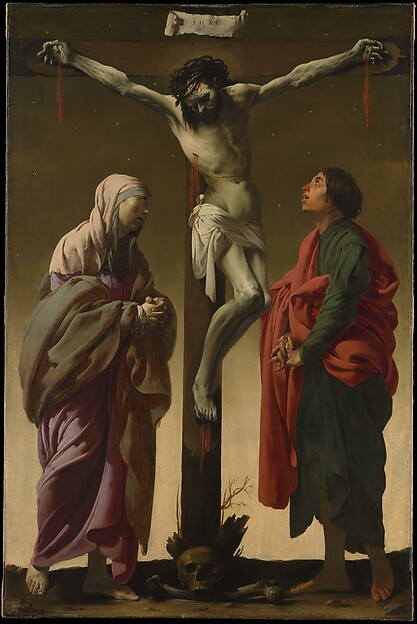
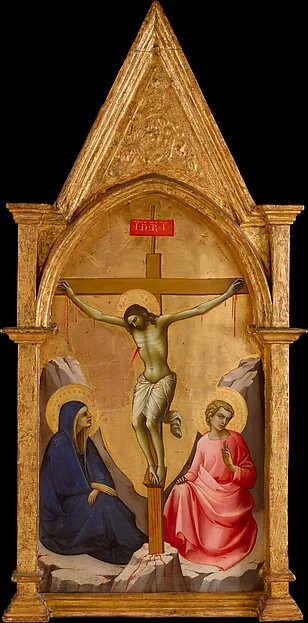
Crucifixion of Christ
The Passion of the Mystical Body of Jesus
Pray for the Church, for the world, for all. The whole of Christendom is taken up into the Jesus Prayer. If you pray only for yourselves, it means that you are not selfless. But if you pray for the Church, you yourselves are the Church. In the Church is Christ, united with her, as well as with the Father and the Holy Spirit. The Most Holy Trinity and the Church are one. St. Elder Porphyrios
The Church built on Peter is the only one that Jesus founded. And because this is so, she is criticized, persecuted and attacked. Blaise Pascal speaks of this fact in his Pensées: Jesus will be in agony even to the end of the world. We must not sleep during that time.
The apostasy from the faith up to now is only the tip of the iceberg. The great apostasy will come when the Freemasonic false ecumenism succeeds in separating the faithful from the teaching authority of the Catholic Church. Then the gate will be wide open for the appearance of the man with the number 666, because almost all will follow the false Christ and the false church.
The mystical body of Jesus will suffer the same fate as the Lord Himself: persecution, contempt, crucifixion, death, but also resurrection. The Church walks the same path. It will be the great purification of the world, mankind and the Church, but at the same time it will also be the new Pentecost.33
In his new book Christus vincit, Auxiliary Bishop Athanasius Schneider writes:
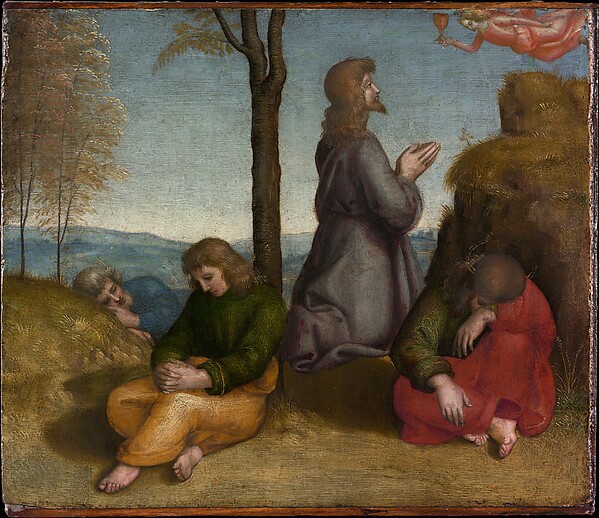
Christ on the Mount of Olives, strengthened by an angel
From the circumstances of the Passion of Christ we can understand the spiritual, indeed mystical, meaning of the sufferings of the Bride of Christ, the Church. The present crisis within the Church is the deepest form of suffering, because the Church is now not persecuted, scourged, stripped of her garments and mocked by her enemies, but to a high degree by her shepherds, by many who are successors of the Apostles.34 […]
When Christ suffered in Gethsemane, He was strengthened by an angel. This is a deep mystery: God in His human nature willed to be comforted and strengthened by a creature. In this tremendous spiritual crisis that we experience within the Church, Christ is comforted and strengthened by souls who remain faithful to the unadulterated Catholic faith, by souls who do not abandon the suffering Christ, the suffering Mother Church, and do not run away.
The consolation and the strength that Christ received from the angel in Gethsemane already contained all the acts of reparation and satisfaction of all believing souls in the entire history of the Church. So many souls are suffering at present, above all in the last fifty years, because of the monstrous crisis of the Church.
34 The mystery of betrayal oozes from the walls of the Church … We are experiencing the mystery of iniquity, the mystery of betrayal, the mystery of Judas … The evil of efficient activism has infiltrated everywhere … We seek to imitate the organization of big businesses. We forget that prayer alone is the blood that can course through the heart of the Church … Someone who no longer prays has already betrayed. Already he is willing to make all sorts of compromises with the world. He is walking on the path of Judas. (Cardinal Robert Sarah, Herr, bleibe bei uns, Kißlegg 2019)
Most precious are the hidden sufferings of the little ones, of those persons whom the liberal, worldly and unbelieving ecclesiastical establishment has pushed to the margins of the Church. Their sufferings are precious, for they comfort and strengthen Christ, who in our present crisis in the Church suffers mystically. […]
Children, young people, families, members of religious orders, priests, bishops and cardinals, if they remain faithful to Christ, if they preserve the Catholic faith unadulterated, if they live a life of chastity and humility, then they are the pure and the little ones in the Church. The following words of St. Paul, which relate to the soul of the individual, refer exactly to the Church and above all to the Church of our days: …provided we suffer with Him in order that we may also be glorified with Him. (Rom 8,17)35
Your burning desire must be this: that the world be sanctified and that all people belong to Christ. Then you will enter the Church, you will live in the joy of paradise, in God, for the fullness of the Godhead dwells in the Church. St. Elder Porphyrios
35 Christus vincit, pp. 440–443.
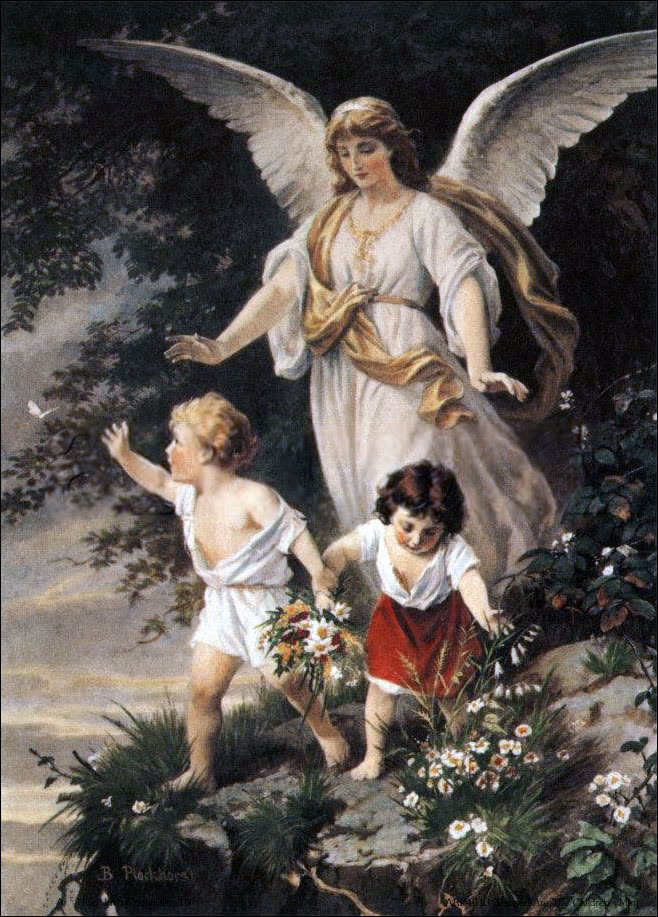
Guardian angel with children
In the School of the Holy Angels
Behold, I send an angel before you, to guard you on the way and to bring you to the place which I have prepared. Give heed to him and hearken to his voice; do not rebel against him, for he will not pardon your transgression; for My name is in him.36 Ex 23,20-22
36 My personal guardian angel was given to me alone, and he is a very powerful spiritual being who is always in the presence of God and who remained faithful to God during the trial of the angels, when some of his brothers fell away from God with Lucifer. My guardian angel and every guardian angel acknowledged Christ in the spirit of humility and of service. Therefore every angel longs ardently to become one day a humble, serving guardian angel of a human being. Every angel dreams of bowing down. His “dream career” consists in being small, in descending and not ascending, as people usually long for in their career dreams. (Christus vincit, pp. 416, 417)
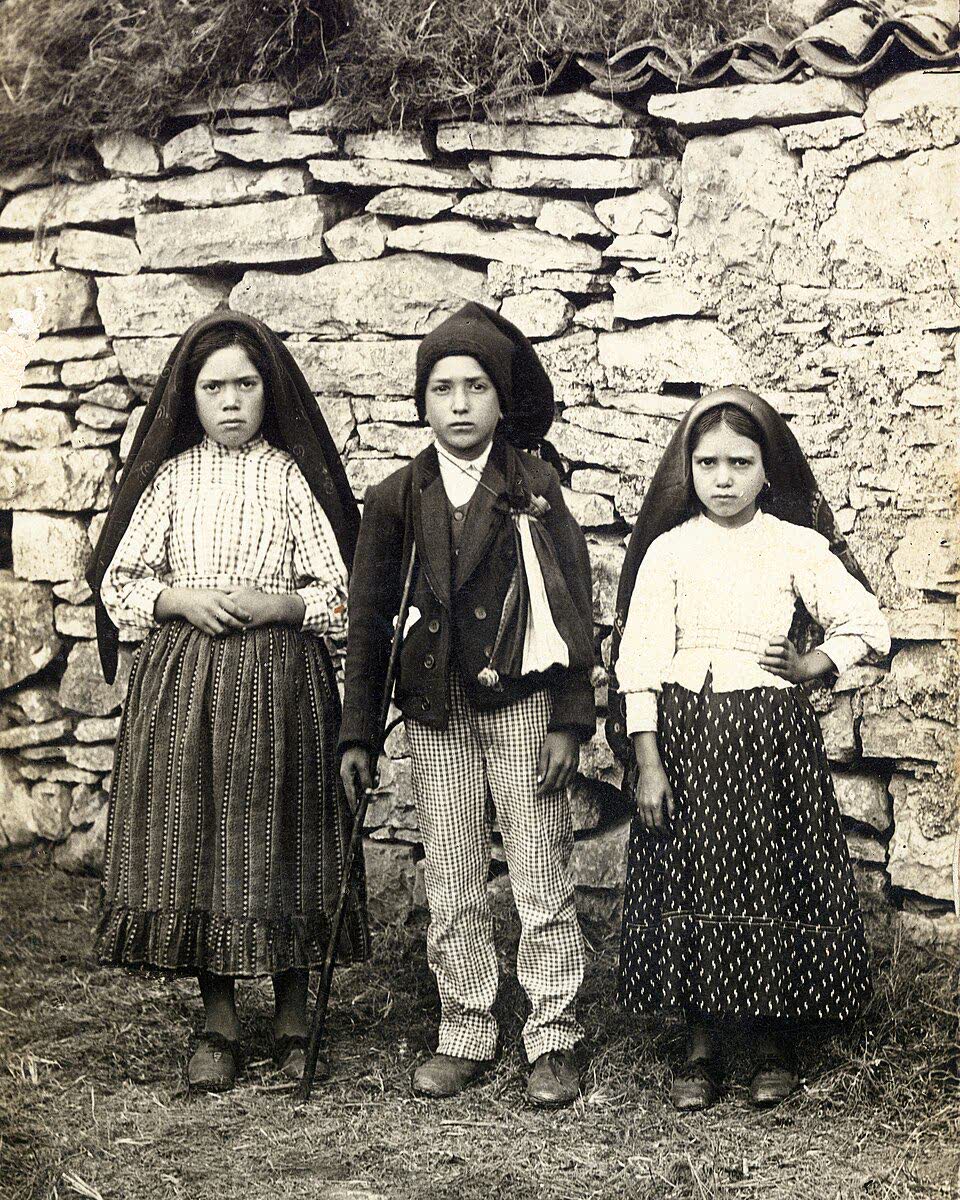
The three shepherd children of Fatima: Lucia, Francisco and Jacinta
What Are You Doing?
Before Mary appeared at Fatima in 1917, the three seer children Lucia, Francisco and Jacinta were prepared for this great grace in 1916 by three visits of an angel of the Lord. At his second appearance the angel spoke the striking words to the children, who were absorbed in play:
“What are you doing?” This “What are you doing?” from the mouth of the angel is extraordinarily profound and contains for each of us a powerful message and a decisive question:
What are we doing with our talent for life? Do we squander this gift in the sandbox of transitoriness, or do we play before God the true song of love, like Mary, the Mother of God, of whom it is said:
It was my delight, day by day, to play before Him … Prov 8,30
This is a word that spans like a rainbow high over the heaven of our concepts, and only a spirit that can fly high and far will recognize this word clearly. Under “playing” we humans can understand, in a figurative sense, the delight of God, God’s rapture in Mary already through her being before God. She is like a crystal that shines a thousandfold and gives a different perspective on each facet, which lets angels and humans break out in jubilation and adoration of God.
And if we want to bring this word down to earth and understand it rightly, we can say that what was a “playing” for Mary, the sinless one, costs us human beings real effort and would have to be rendered for us as: “It is our delight, day by day, to be before God in adoration and in tireless zeal for everything good, God-willed and leading to God!” If we want always to think only of God, always want to delight Him through a small proof of love – in the form of a joyfully borne sacrifice, in the form of a new gift – and always return to Him like the ball into the child’s hand, then our life too is a loving being before God, a playing of the child at the hand of Mother Mary. What is our doing here on the small earth, measured against eternity, does it not look like playing?
But God takes this our “playing” very seriously. He has given us an angel at every step and every turn, so that our foot may not stumble, and he “plays” before God, he plays the song of our life, of our love for God; he sings for us the Gloria and the Credo and the Sanctus, the Agnus Dei and the Domine non sum dignus; he plays our jubilation on the harp. Every trait of our nature is a string. When it sounds for God, our angel carries our act of will, transformed into a tone, before our Lord like a song: our love, our striving, our obedience, our readiness, our saying yes, our silence and forgiving.
And now once more back to the angel’s question “What are you doing?” and his very concrete mission for each one of us:
Pray, pray much! The Hearts of Jesus and Mary have plans of mercy with you. Offer the Most High unceasing prayers and sacrifices.
Make of everything you can a sacrifice, to make reparation for the sins by which He is offended and to implore the conversion of sinners. […] Above all accept suffering and bear in submission what the Lord will send you.
I give thanks to Thee, O Lord my God, with my whole heart, and I will glorify Thy name for ever. Ps 86,12
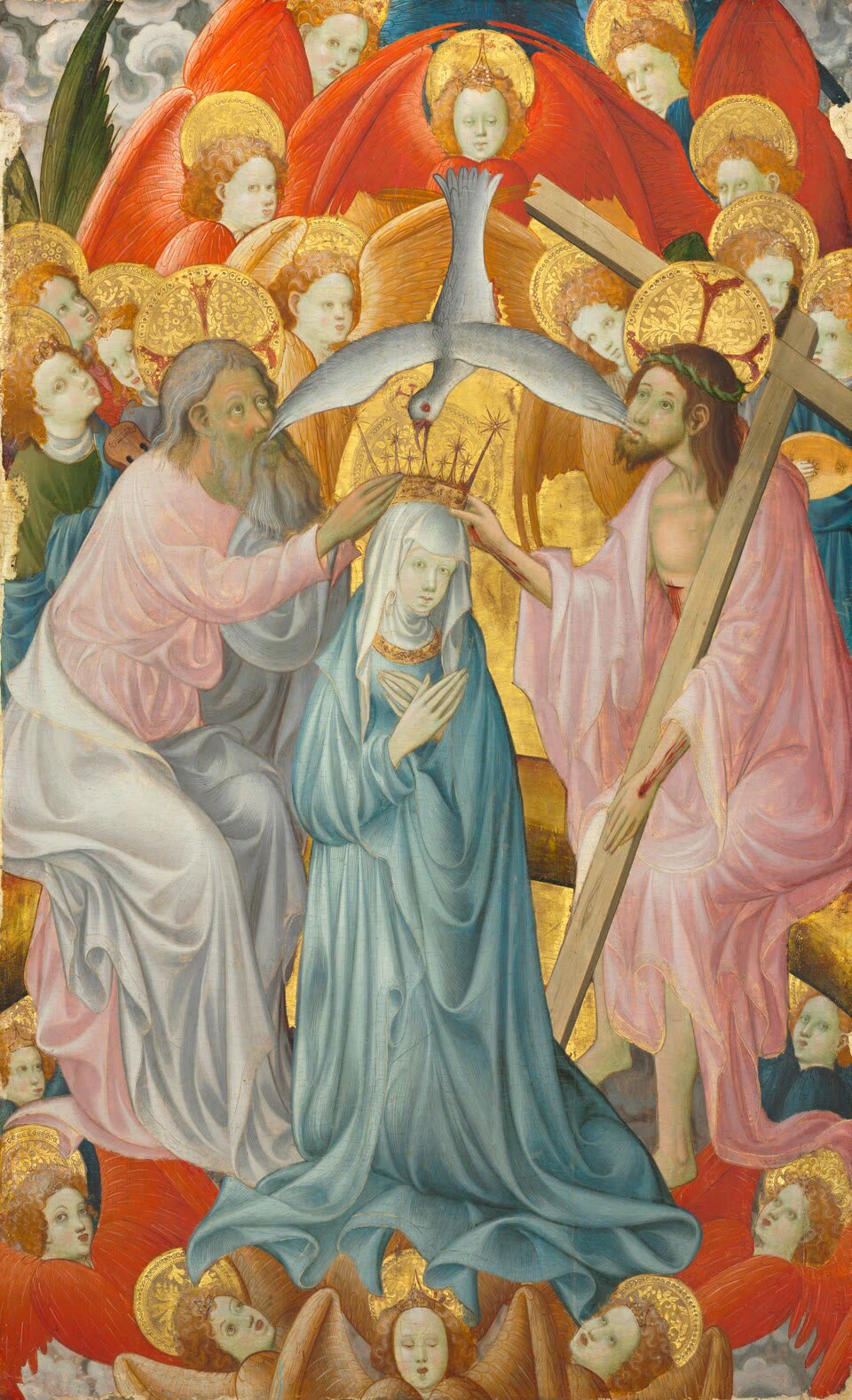
Choirs of the holy angels
Prayer of Praise of the Holy Angels to the Most Holy Trinity
Hail to You, eternal Ruler, living God, You who have always been, awesome and just Judge, ever kind and merciful Father! To You be adoration, praise, honor and glory, anew and for all time, through Your daughter clothed with the sun, our wonderful Mother!
Hail to You, sacrificed God-Man, bleeding Lamb, King of Peace, Tree of Life, You our Head, Gate to the Heart of the Father, eternally born of the Living One, reigning forever with the One Who Is! To You be, anew and for all time, power and glory and greatness and adoration and reparation and praise, through Your immaculate Mother who bore You, our wonderful Mother!
Hail to You, Spirit of the Eternal One, ever streaming forth holiness, working in God from eternity! You flood of fire from the Father to the Son, You rushing storm who breathe strength and light and glow into the members of the eternal Body. You eternal blaze of love, shaping Spirit of God in the living, You red stream of fire from the Ever-Living One to mortals! To You be, anew and for all time, power and glory and beauty through Your bride crowned with stars, our wonderful Mother!37
37 This wonderful prayer of praise was prayed by an innumerable host of holy angels at the last apparition of the Mother of God in Marienfried on June 25, 1946. Imprimatur: Augsburg, October 27, 1966. “It is an echo of that apocalyptic song which the great multitude that no one can count prays with the angels and the elders, prostrate before the throne.” (From a festal sermon by Bishop Dr. Rudolf Graber in Marienfried)
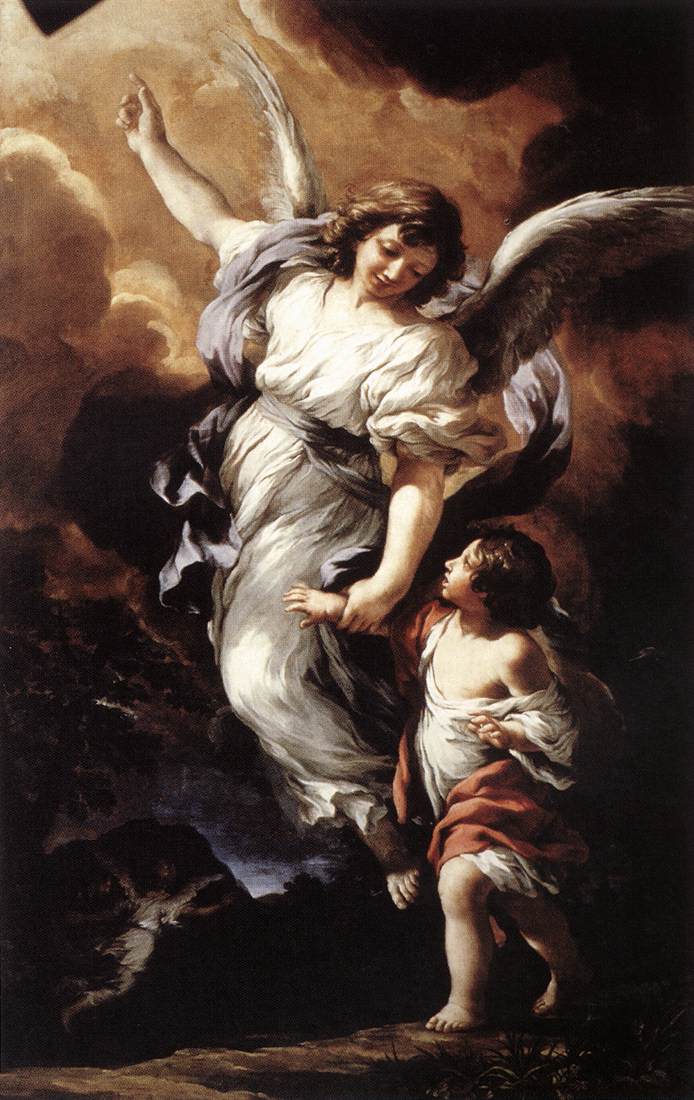
Guardian angel leads a child (painting by Pietro da Cortona)
Consecration to the Guardian Angel
Holy Guardian Angel, you who always behold the face of our Father in heaven, to you God entrusted me from the beginning of my life. I thank you from my heart for your loving care. To you I surrender myself and promise you my love and fidelity. I ask you, protect me against my own weakness and against the attacks of the evil spirits. Enlighten my mind and my heart, that I may always recognize and fulfill the will of God; and lead me to union with God, the Father, the Son and the Holy Spirit. Amen.38
38 The main task of the holy angels is the praise of God. But they are also commissioned by Him to wage the mighty battle against Satan and all evil spirits, under the command of the most holy Virgin. Their position is therefore essentially part of the victorious plans of the woman clothed with the sun against the red dragon: Drunk with the blood of the saints and the blood of the martyrs of Jesus. (Rev 17,6) And since they are always at our side in the struggle, to give us strength and courage, to bind up our wounds and to defend us against the evil one, it is important always to stay in their company.
Come, Lord Jesus – Maranatha! Rev 22,20
May the Most Holy Name of Jesus be in my heart, may He be in my mouth, may He be on my tongue.
May the Most Holy Name of Jesus enlighten my understanding, purify my imagination, strengthen my will!
May the Most Holy Name of Jesus be in me, may He be above me, may He be before me, may He be beside me, may He be in all my thoughts, words and works.
May the Most Holy Name of Jesus be my protection against all evil assaults and temptations.
May the Most Holy Name of Jesus keep me from all heavy thoughts, from all discouragement and despondency.
May the Most Holy Name of Jesus be my unshakable trust, my strength and might, my hope and confidence in life and in death! Amen.
They shall see His face, and His name shall be on their foreheads. And night shall be no more; they need no light of lamp or sun,
for the Lord God will be their light, and they shall reign for ever and ever. Rev 22,4-5